The announcement
The Lagos State Government is targeting an expansion of its fibre-optic network from 2,400 kilometres to about 6,000 kilometres and plans to reserve 10 per cent of public procurement for startups, Deputy Governor Obafemi Hamzat said at a fintech town hall in Lagos on Friday. The fibre expansion would be pursued through partnerships with telecommunications companies and other private-sector stakeholders.
Under the procurement initiative, startups would get access to government contracts, with payment to participating businesses targeted within 15 days — an explicit attempt to ease the cash-flow constraints that squeeze small vendors on public work. Hamzat said women accounted for about 54 per cent of startups that had already undertaken work under the initiative.
The blueprint meeting
The town hall, themed "The Lagos Digital Economy Blueprint: Co-Authoring the Lagos Digital Economy Agenda," brought together major players in Nigeria's fintech and technology ecosystem — Flutterwave, Paystack, PiggyVest, Kuda, PalmPay, Mastercard, Visa, Oracle, Interswitch, OPay, Moniepoint, Paga and Meristem — with investors and government representatives.
Hamzat framed the gap as commercial, not scientific: many innovations developed by young Nigerians fail to reach the market because of inadequate funding and weak connections with industry. "We have seen a lot of ideas and young people bringing innovations, but how do we bring them to capital? How do we ensure that we understand the needs of the private sector and connect them to research?" he asked, urging companies to partner with universities and fund problem-driven research.
The connectivity push comes with public-service digitisation alongside it: 680 of the state's 1,028 public schools are currently connected to the internet, with efforts underway to reach the rest, and the government is developing an enterprise architecture linking ministries and agencies through APIs to cut duplication. Hamzat also noted Lagos has about eight million registered residents — below the state's estimated population — making deeper data registration a prerequisite for planning.
AI-assisted analysis
Machine-synthesised- Fact
Lagos State is targeting expansion of its fibre-optic network from 2,400 kilometres to about 6,000 kilometres through partnerships with telecommunications companies and other private-sector stakeholders, and plans to reserve 10 per cent of public procurement for startups.
Source: Punch(opens in a new tab) - Figure
Startups engaged through the procurement programme are targeted to receive payment within 15 days to reduce cash-flow difficulties, and women accounted for about 54 per cent of startups that had undertaken work under the initiative.
Source: Punch(opens in a new tab) - Quote
Hamzat said: "We have seen a lot of ideas and young people bringing innovations, but how do we bring them to capital? How do we ensure that we understand the needs of the private sector and connect them to research?"
Source: Punch(opens in a new tab) - Fact
The town hall, themed "The Lagos Digital Economy Blueprint: Co-Authoring the Lagos Digital Economy Agenda," was attended by Flutterwave, Paystack, PiggyVest, Kuda, PalmPay, Mastercard, Visa, Oracle, Interswitch, OPay, Moniepoint, Paga and Meristem; Flutterwave co-founder Gbenga Agboola called for predictable policies and better regulatory coordination.
Source: Legit.ng(opens in a new tab)
Synthesised by PulseGrid's editorial AI from the sourced claims in this article and reviewed by PulseGrid AI Desk. How we use AI.
Partner content · paid placement
Sponsored tile inventory: Q1 2027
Native tiles in the in-feed carousel and the article block, sold only with the visible Sponsored / Partner Content label. Slot sizes, positions and advertiser terms are published on the advertise page. No newsroom byline is ever attached to partner copy.
Why it matters
If delivered, the 2,400km → 6,000km build would be one of the biggest state-level connectivity commitments in Nigeria's digital-economy push — fibre is the layer that everything from data-centre ambitions to school connectivity depends on, and Lagos is where Nigeria's compute and fintech density is highest. The delivery mechanism matters as much as the number: the state is explicitly positioning itself as a partner to telcos and private capital rather than a sole builder.
The procurement set-aside is the more novel instrument. Nigeria's startup sector has long described public contracting as a growth ceiling — slow payments, opaque access, incumbents winning on relationships. A 10% ring-fence with 15-day payment terms attacks both barriers at once. The caution is the usual one with announced policy: targets are not deployments, and the test will be whether the fibre kilometres, the contracts and the payment clock show up in practice. PulseGrid will track the delivery, not the pledge.
What to watch
Procurement notices actually carrying the startup set-aside, and payment timelines measured against the 15-day target.
Whether the fibre expansion lands as a state-led build, telco partnerships, or a financing structure — and the pace against the 6,000km figure.
School connectivity moving from 680 toward the full 1,028.
And whether the blueprint town hall produces a published agenda document with accountable milestones.
Bottom line
Lagos is putting numbers on the digital-economy pitch: tripled fibre, a startup share of state buying, and a payment clock. The plan is credible in ambition and well-matched to the state's bottlenecks; execution data — kilometres lit, contracts signed, invoices paid on time — is what will make it a story rather than a speech.
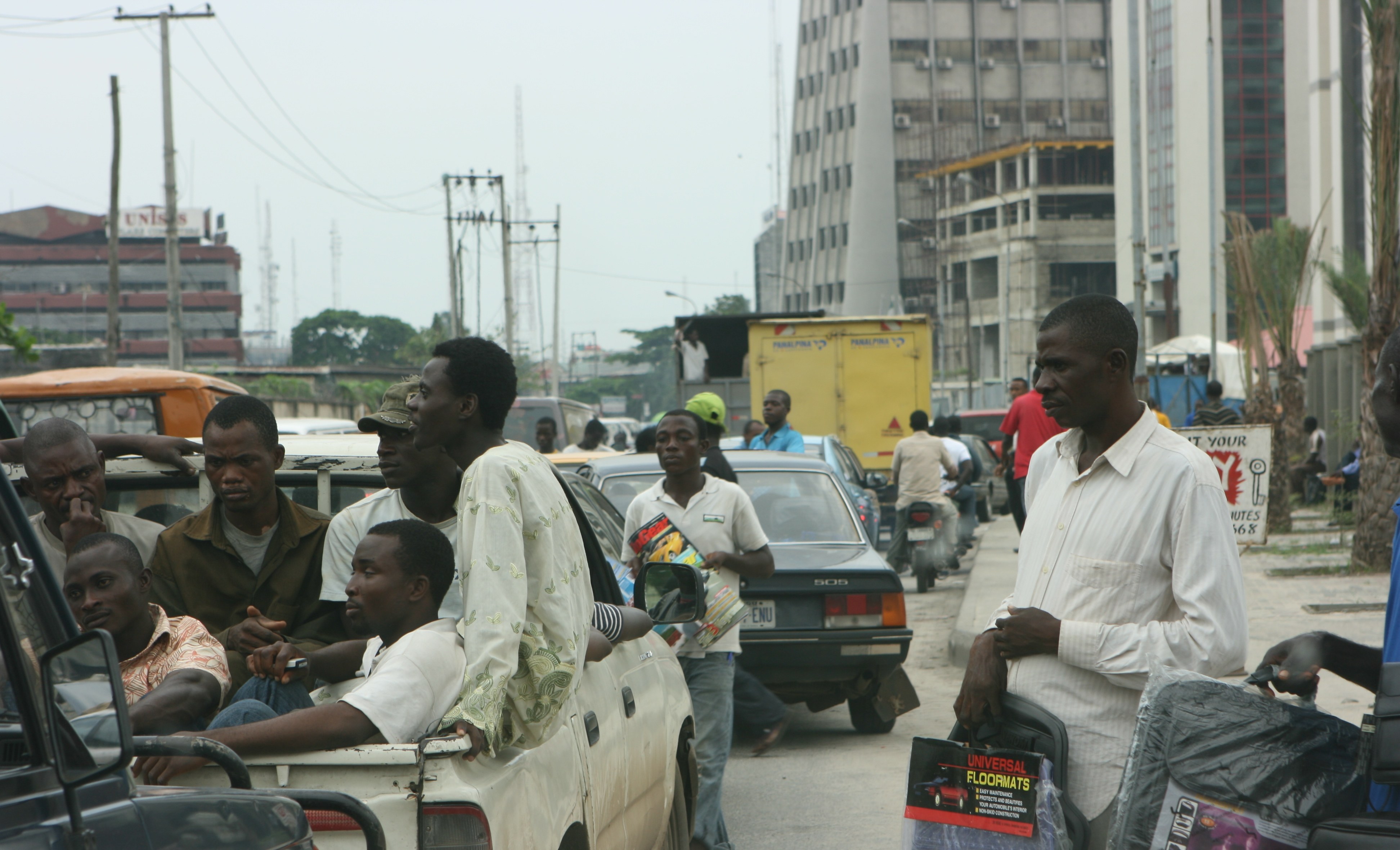
Cover photo: 2008 Lagos Nigeria 2655744624 — Dolapo Falola from New York, NY, USA / Wikimedia Commons, licensed CC BY-SA 2.0 (cropped; license: https://creativecommons.org/licenses/by-sa/2.0).