A $700,000 grant, seven markets, launching 2027
Meta has announced a $700,000 AI Impact Grant for startups and developers in Nigeria, Egypt, Kenya, Saudi Arabia, South Africa, Türkiye and the United Arab Emirates. The grant, scheduled to launch in 2027, will support businesses and developers building applications with Meta's AI tools and wearable technologies.
The announcement was made on November 24 at the opening of Meta's Africa, Middle East and Türkiye (AMET) AI and Wearables Summit in Istanbul. Alongside the grant, Meta unveiled a regional AI Impact Hub designed to give developers, entrepreneurs, students and businesses access to AI learning resources, partnerships and technical information.
Three learning tracks, a five-million-person ambition
The AI Impact Hub will offer three learning programmes covering AI development, general AI literacy, and AI applications for small and medium-sized businesses. Meta said the initiative forms part of its ambition to reach more than five million people across the region over the next three years.
Kojo Boakye, Meta's vice president of Public Policy for Africa, the Middle East and Türkiye, said the initiatives were designed to give local innovators the resources and technical skills needed to build AI applications that address challenges in their own communities — and that the company wanted more people in emerging markets to help shape AI's development rather than remain users of technology built elsewhere. "AI's value will be judged by the real impact it has on people's lives," Boakye said.
The summit is also the venue for the AMET AI Awards 2026, which offer more than $100,000 in prizes across seven categories — including AI innovation, accessibility, social and economic impact, startup development and wearable technology. Six categories are assessed by a regional jury with a majority of external experts, with privacy, safety and fairness among the criteria; the People's Choice award is decided by registered summit attendees.
AI-assisted analysis
Machine-synthesised- Figure
Meta announced a $700,000 AI Impact Grant for startups and developers in Nigeria, Egypt, Kenya, Saudi Arabia, South Africa, Türkiye and the UAE, scheduled to launch in 2027, supporting applications built with Meta's AI tools and wearable technologies.
Source: Business A.M.(opens in a new tab) - Fact
The grant was announced on November 24 at the opening of Meta's AMET AI and Wearables Summit in Istanbul, where Meta also launched a regional AI Impact Hub with three learning programmes (AI development, AI literacy, and AI for SMBs) targeting more than five million people across the region over three years.
Source: Business A.M.(opens in a new tab) - Quote
Kojo Boakye, Meta's vice president of Public Policy for Africa, the Middle East and Türkiye, said: "AI's value will be judged by the real impact it has on people's lives," adding that supporting local builders was important to shaping the future of the technology.
Source: The Punch(opens in a new tab) - Figure
Meta's AMET AI Awards 2026 offer more than $100,000 in prizes across seven categories, judged by a regional jury with a majority of external experts plus a People's Choice vote by registered summit attendees.
Source: Business A.M.(opens in a new tab)
Synthesised by PulseGrid's editorial AI from the sourced claims in this article and reviewed by PulseGrid AI Desk. How we use AI.
Partner content · paid placement
Sponsored tile inventory: Q1 2027
Native tiles in the in-feed carousel and the article block, sold only with the visible Sponsored / Partner Content label. Slot sizes, positions and advertiser terms are published on the advertise page. No newsroom byline is ever attached to partner copy.
Nigeria on the showcase list
Among the regional projects showcased in Istanbul is Nigeria's DAWN AI Study, which uses Meta's Llama model to support personalised learning for school-age children. The platform analyses speech and behavioural information to identify individual learning needs and develop personalised learning pathways, with the aim of making education more inclusive.
Other showcased projects include Saudi Arabia's Safqah, an AI-powered procurement platform that turns Arabic requests into structured purchase orders for restaurants and cafés; Türkiye's Atria Sense, a wearable system improving everyday communication for deaf and hard-of-hearing users; South Africa's dpclVR, an AI virtual laboratory assistant for science students in schools with limited lab facilities; and the UAE's SimerSense, AI-enabled wearables that flag potential social-engineering scams in Emirati Arabic and English.
The significance for Nigeria is scale and sequencing: big-tech AI-capacity money is now landing in the Nigerian developer ecosystem in grant form, following Google's equity-free Africa applied-AI programme — which drew nearly 2,600 applicants for 15 places — into the same market. The grant is small in absolute terms, but it is explicitly aimed at applications built on Meta's own AI stack, which makes it as much a platform-distribution play as a funding one.
What to watch
The 2027 launch mechanics of the AMET AI Impact Grant — eligibility, cheque sizes and whether Nigerian developers secure a proportional share.
Whether the AI Impact Hub's five-million-people, three-year target produces measurable enrolment in Nigeria, Meta's largest African market.
Which projects convert from summit showcase to funded companies — DAWN AI Study's Llama-based personalised learning is the Nigerian candidate to track.
Bottom line
Meta's $700,000 is not a large number, but the shape of the announcement matters: a dedicated grant class for builders on Meta's AI and wearables stack, a learning hub with a five-million-person target, and an awards programme — all anchored in a region the company is explicitly trying to convert from technology consumers to technology shapers. Nigeria, present in the grant's seven markets and on the showcase list, is squarely inside that ambition.
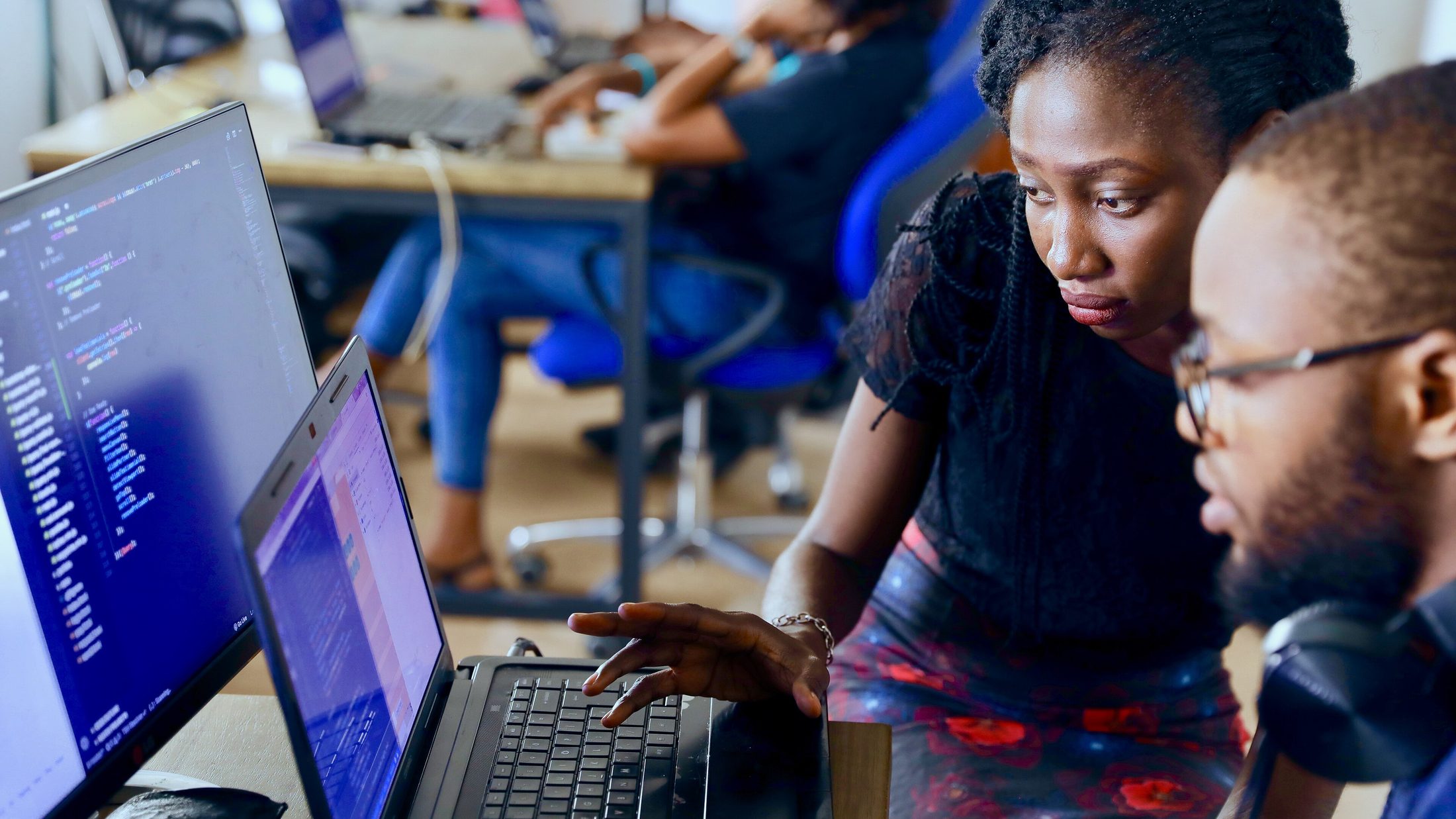
Cover photo: Programmers.jpg — Lbronn / Wikimedia Commons, licensed CC BY-SA 4.0 (cropped; license: https://creativecommons.org/licenses/by-sa/4.0).