The announcement
MTN Nigeria has partnered with the Plateau State Government to establish a 600-seat Business Process Outsourcing (BPO) and Artificial Intelligence hub in Jos. The initiative is pitched at digital jobs, local capacity building and investment attraction for the state, and at positioning Plateau as an emerging destination for outsourcing and technology-driven services.
MTN Nigeria has converted its existing Jos facility into a modern, technology-enabled workplace built for large-scale BPO operations. The hub opens with 600 workstations and provision for expansion. First coverage of the partnership came from Nigeria Communications Week on Nov 19; fuller write-ups followed on Nov 25–26.
What has actually been built
The facility is equipped with enterprise connectivity via Local Area Network, fixed and wireless internet access, what the partners call resilient power infrastructure, integrated security systems and a fully refurbished workspace. MTN Nigeria will operate and maintain the infrastructure under a Managed Services model, taking responsibility for the day-to-day running of the facility.
The scope of work the hub is designed to host is broad: customer-experience and contact-centre operations, back-office processing, data management, and "AI-enabled support services" for organisations across sectors and regions. The division of labour is explicit — the Plateau State Government contributes its people and a commitment to creating economic opportunities, while MTN provides the connectivity, digital infrastructure and technical expertise. The initiative will also prioritise digital and soft-skills training for young people seeking work in the outsourcing industry.
The pitch, and the read
Lynda Saint-Nwafor, MTN Nigeria's chief enterprise business officer, framed the project as an economic-participation play. "At MTN Nigeria, we believe technology should do more than connect people. It should enable economic participation, create opportunities and unlock new industries," she said. "Our collaboration with the Plateau State Government reflects that belief. Together, we have built an environment that can support the growth of Nigeria's Business Process Outsourcing sector while expanding access to digital jobs and skills." She added that cities such as Jos could serve regional and international clients with the right infrastructure, connectivity and skilled workforce.
AI-assisted analysis
Machine-synthesised- Fact
MTN Nigeria has partnered with the Plateau State Government to establish a 600-seat Business Process Outsourcing and AI hub in Jos, converting its Jos facility into a modern technology-enabled workplace that opens with 600 workstations and provision for expansion.
Source: Vanguard (Ebunoluwa Sessou)(opens in a new tab) - Fact
The facility is equipped with enterprise connectivity via Local Area Network, fixed and wireless internet access, resilient power infrastructure, integrated security systems and a fully refurbished workspace, and MTN Nigeria will operate and maintain the infrastructure under a Managed Services model.
Source: Vanguard (Ebunoluwa Sessou)(opens in a new tab) - Fact
The hub is designed to accommodate customer-experience and contact-centre operations, back-office processing, data management and AI-enabled support services for organisations across sectors and regions; the Plateau State Government contributes its people and commitment to economic opportunity while MTN provides connectivity, digital infrastructure and technical expertise.
Source: Techeconomy (Francis Onyemachi)(opens in a new tab) - Quote
Lynda Saint-Nwafor, MTN Nigeria chief enterprise business officer, said: "At MTN Nigeria, we believe technology should do more than connect people. It should enable economic participation, create opportunities and unlock new industries. Our collaboration with the Plateau State Government reflects that belief. Together, we have built an environment that can support the growth of Nigeria's Business Process Outsourcing sector while expanding access to digital jobs and skills."
Source: Vanguard (Ebunoluwa Sessou)(opens in a new tab)
Synthesised by PulseGrid's editorial AI from the sourced claims in this article and reviewed by PulseGrid AI Desk. How we use AI.
Partner content · paid placement
Sponsored tile inventory: Q1 2027
Native tiles in the in-feed carousel and the article block, sold only with the visible Sponsored / Partner Content label. Slot sizes, positions and advertiser terms are published on the advertise page. No newsroom byline is ever attached to partner copy.
The geography is the story. Nigeria's outsourcing and tech employment has concentrated in Lagos and Abuja; this puts a 600-seat managed facility in the middle belt, with a telco rather than a pure-play BPO operator as the infrastructure provider. The "AI-enabled" framing also invites a fair question — what share of the 600 seats survives as AI absorbs routine support work over the hub's life. For now, the concrete deliverable is seats, connectivity and training, with expansion room if demand follows.
What to watch
Tenant and client announcements: a 600-seat facility only matters if organisations actually place work in it — watch for named outsourcing clients or government back-office contracts.
What "AI-enabled support services" becomes in practice: model supervision and escalation work (new kinds of jobs) versus automation of the seat model itself (fewer humans per contract).
Whether the Jos model is replicated in other states — and whether seat count or export revenue becomes the metric that counts.
Bottom line
This is a public-private digital-jobs play with real infrastructure attached — 600 workstations, managed connectivity and power, and a training pipeline — in a city that has not been on the outsourcing map. The optimistic read is that Nigeria's BPO industry finally gets a credible second geography beyond Lagos. The sceptical read is that AI-labelled seats are being built precisely as AI automates seat-based work. Both reads can be tested against the only number that matters over time: durable, dignified employment for Plateau indigenes.
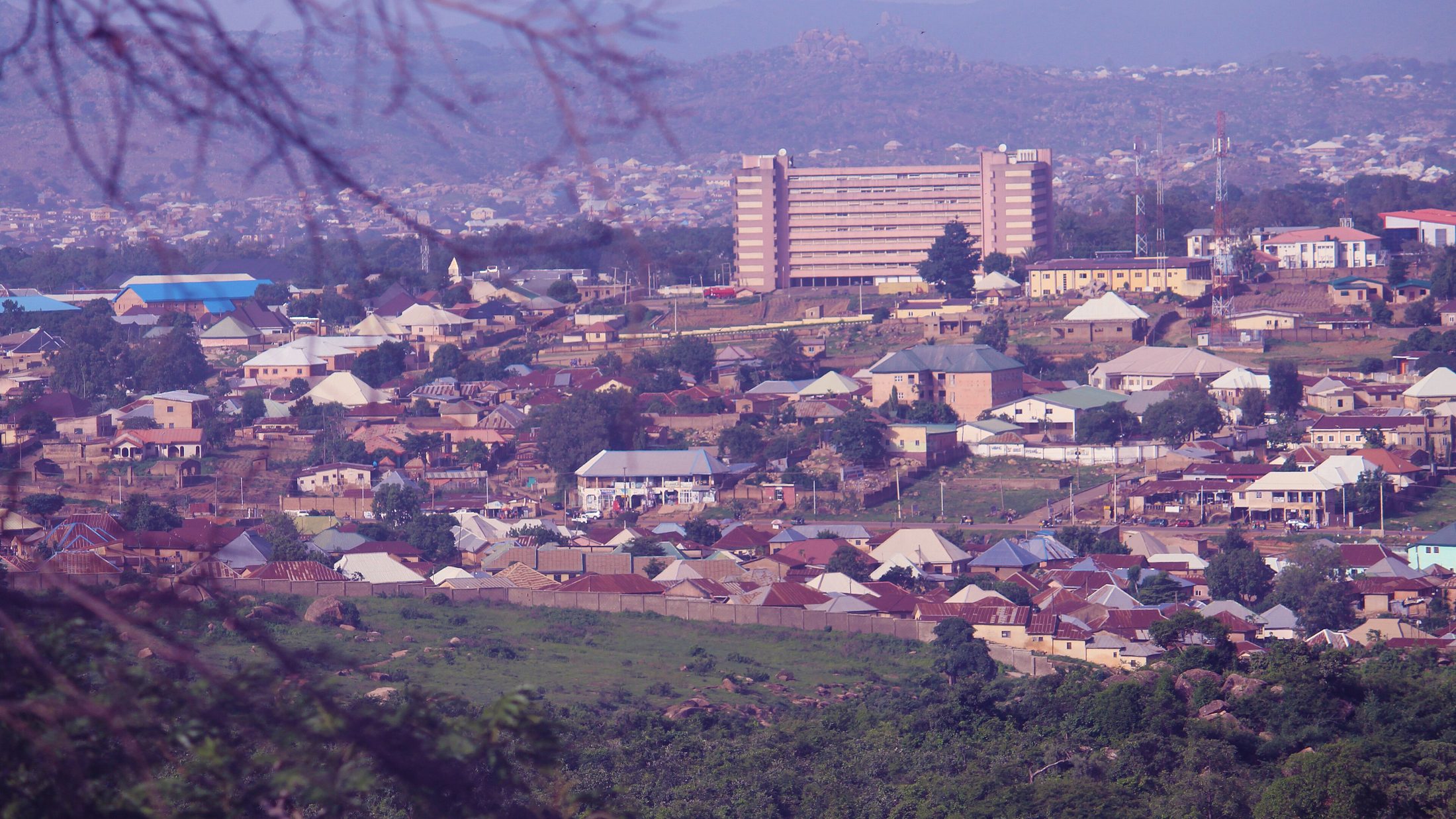
Cover photo: A View of the city of Jos from the Jos Wildlife Park 02.jpg — Kambai Akau / Wikimedia Commons, licensed CC BY-SA 4.0 (cropped; license: https://creativecommons.org/licenses/by-sa/4.0).