The election result
After a campaign season filled with outrage against artificial intelligence data centers, the US midterm elections ushered in a wave of Democrats pledging to clamp down on the energy-hungry facilities. Democrats took control of Congress, flipped at least five governors' offices — including data-center hot spots Texas, Ohio, Georgia, Nevada and Iowa — and took full control of state governments in five more states: Wisconsin, Minnesota, Pennsylvania, Nevada and Michigan.
Data Center Watch, a project of AI security consultancy 10a Labs, tracked winning candidates for Congress and governorships and found the vast majority had expressed support for stronger regulation or even a moratorium: among governors, 32 of the 34 victorious candidates in races where AP called a winner support stronger regulation or restrictions, and 12 of the 34 support bans or moratoriums. Data-center skepticism — often fused with affordability politics over electricity prices — was a persistent theme in attack ads: according to AdImpact, campaigns spent more than $380 million on television ads mentioning data centers, with Democrats outspending Republicans on the topic by more than 3-to-1.
Down-ballot, the verdict was blunt
Voters in local referendums cast ballots overwhelmingly in favour of restricting data centers, according to polling and data science firm Redbud Consulting, which tracked 47 referendums in 44 municipalities across 12 states — including 21 in Ohio alone, eight in Maine, seven in Illinois and four in Kansas. Restrictions were approved in 44 of the 45 elections where counting was complete.
About three-quarters of US voters oppose construction of a new data center in their community, according to The AP Voter Poll, with majorities opposed in red and blue states alike — yet only about one-quarter of voters said AI data centers were "crucial" to their vote for Congress, well below government corruption or cost of living. The backlash is broad but was not, by itself, the deciding turnout issue.
The Texas race was the marquee test. Gina Hinojosa, a lawyer who defeated outgoing governor Greg Abbott — who had wanted to make the state the "nerve center" of AI development before shifting stance amid backlash over energy and water — campaigned on an immediate statewide pause. "We need an immediate moratorium on data centers to last until the legislature can meet to put in place real protections so Texans can have a seat at the table to decide if and how data centers come into their communities," Hinojosa said during the campaign. Analysts had described deeply conservative Texas as a crucial test for the future of AI infrastructure: the state is expected to account for nearly 30% of national electricity demand dedicated to AI operations by 2028, according to Bloom Energy calculations cited by AFP, and JLL projects Texas will overtake northern Virginia as the largest global data center market by 2030.
AI-assisted analysis
Machine-synthesised- Fact
Democrats took control of Congress in the Nov 3, 2026 midterms, flipped at least five governors' offices including Texas, Ohio, Georgia, Nevada and Iowa — many of them data-center hot spots — and took full control of state governments in Wisconsin, Minnesota, Pennsylvania, Nevada and Michigan.
Source: PBS NewsHour / Associated Press(opens in a new tab) - Figure
Data Center Watch, a project of AI security consultancy 10a Labs, tracked winning candidates for Congress and governorships and found the vast majority had expressed support for stronger regulation or even a moratorium: among governors, 32 of the 34 victorious candidates in races where AP called a winner support stronger regulation or restrictions, and 12 of the 34 support bans or moratoriums.
Source: PBS NewsHour / Associated Press(opens in a new tab) - Figure
According to AdImpact, campaigns large and small spent more than $380 million on television ads mentioning data centers, and Democrats outspent Republicans on the topic by a more than 3-to-1 ratio.
Source: PBS NewsHour / Associated Press(opens in a new tab) - Figure
Redbud Consulting tracked 47 referendums in 44 municipalities across 12 states, including 21 in Ohio, eight in Maine, seven in Illinois and four in Kansas; restrictions on data centers were approved in 44 of the 45 elections where counting was complete.
Source: PBS NewsHour / Associated Press(opens in a new tab)
Synthesised by PulseGrid's editorial AI from the sourced claims in this article and reviewed by PulseGrid AI Desk. How we use AI.
Partner content · paid placement
Sponsored tile inventory: Q1 2027
Native tiles in the in-feed carousel and the article block, sold only with the visible Sponsored / Partner Content label. Slot sizes, positions and advertiser terms are published on the advertise page. No newsroom byline is ever attached to partner copy.
Wall Street reads it as a hurdle, not a shutdown
The results landed into an already nervous tape. On the Thursday after the vote, the Nasdaq — heavy with AI and tech stocks — sank 11% below its all-time high amid worries that data-center construction may slow as borrowing gets costlier; AI data-center construction is driving much of US economic growth, so a slowdown could chill the broader economy.
In an analyst report, Morgan Stanley said decisive results for Democrats carry "greater expectations for data center restrictions" that, under new state regulations, could "split the country into areas that are open to new data centers and those without." It singled out Hinojosa's Texas win as the "most important election result" for data-center development, and said Ohio's election of Democrat Dr. Amy Acton as governor — who has pledged to block a data-center project unless it meets certain standards — "creates significant risk of data center project delays in the state."
The read-throughs ran across the sector. Market strategist Patrick Munnelly of Tickmill Group said Democratic opposition "could focus on power use, environmental constraints, local infrastructure strain, competition policy and the social consequences of AI deployment" and that while it does not break the long-term AI theme, "it can raise the hurdle rate for investment." In Georgia, incoming Democratic governor Keisha Lance Bottoms has advocated a temporary statewide pause on new data centers alongside requirements that large customers bear their infrastructure costs, noted Stephen Innes at SPI Asset Management. Veteran analyst Jim Bianco put the political arithmetic bluntly: with a "29 to 1 lead to restrict data centers, politicians that want to remain employed as politicians are going to heed these messages."
Industry response
The industry moved quickly to shape the rules rather than fight them. AI giant OpenAI published a framework the Thursday after the election enumerating new commitments to the communities where it develops data centers, asking federal, state and local policymakers to write "clear rules for how the industry builds" — "Lawmakers should establish rules to advance responsible investment, protect residents, and ensure that the benefits of AI infrastructure are broadly shared," the post said.
The Data Center Coalition echoed the trust-building line. Dan Diorio, a coalition official, said the industry is aware many midterm winners have vowed to impose a moratorium: "We should expect them to want to deliver on those promises, but there are going to be real world consequences of that" — including host communities missing out on tax revenue or payments from tech companies, he said, noting data centers also drive broader economic expansion.
Bottom line
The data-center backlash has graduated from zoning skirmishes to an electoral mandate: near-sweeping support for regulation among victorious governors, referendums going 44-1 for restrictions, and a federal picture in which even a White House friendly to the industry cannot stop state-level constraint. The likely outcome is not a US buildout halt but a politically rationed one — a country splitting into states that bid for data centers and states that ration them, with the power bill, the water fight and the hurdle rate all moving together.
PulseGrid will follow the first legislative sessions of the new governors as moratorium pledges turn into bills.
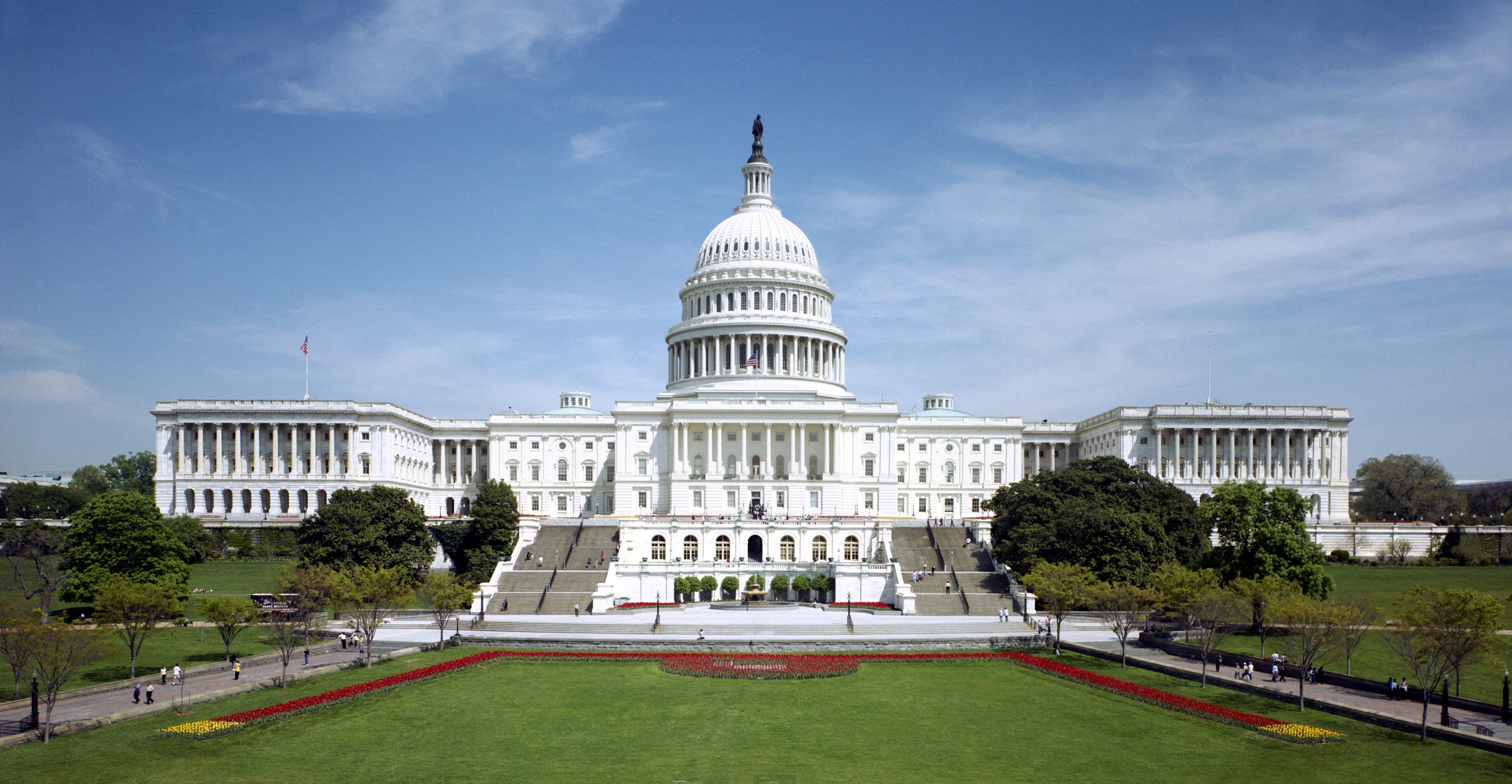
Cover photo: United States Capitol - west front — Architect of the Capitol / Wikimedia Commons (Public domain, cropped; no rights reserved).