The plan
INFRAGORA Global Capital, a South African infrastructure investment firm, plans to begin construction of two AI-ready data centres in Nigeria in the second quarter of 2027, with the proposed investment estimated at $650 million to $1 billion. The facilities, to be built in Lagos and Delta State under the firm's AFRIDATA Datacenter Platform, would initially deliver 60–70 megawatts of combined capacity, expandable to 100 megawatts — explicitly subject to financing.
The project, first reported by TechCabal on 26 October, is in the final stages of detailed assessment and design, with financial close expected before construction begins, Kiel Odiogo, INFRAGORA's senior managing director, told TechCabal. The company has not disclosed how much funding it has secured or identified its financial backers beyond saying the project has attracted commitments and support from regional and global institutional investors. “We cannot disclose specific funding secured due to confidentiality obligations,” Odiogo said, adding that capital mobilisation was on track.
The US Trade and Development Agency is funding a feasibility study for the project — about $1.87 million, covering technical and commercial viability including the facilities' capacity to support AI workloads. USTDA's support is also intended to create opportunities for American technology companies supplying AI software, cloud infrastructure, computing hardware, networking equipment and cybersecurity solutions.
Flagship of a $3B–$5B continental platform
The Nigerian project is the proposed flagship of a continental platform estimated at $3 billion to more than $5 billion. INFRAGORA plans a further 300MW to 550MW of data-centre capacity across markets including Ghana, Côte d'Ivoire, Kenya, Tanzania, Angola, South Africa and Egypt. For scale: the proposed Nigerian facilities would rank among the country's largest planned data-centre investments — Kasi Cloud's 100-megawatt Lagos project, by comparison, is backed by an estimated $250 million in initial capitalisation.
The financing posture is the caveat that comes with almost every African compute announcement of the past year. Announced capacity — here 60–100MW, elsewhere Cassava Technologies' 12,000-GPU Kenya and Nigeria plans — is racing ahead of committed capital, and INFRAGORA's own disclosure posture (commitments claimed, amounts and backers withheld) leaves the gap between the two unquantified. USTDA's feasibility study is itself a tell: the technical and commercial viability of the flagship is still being assessed.
AI-assisted analysis
Machine-synthesised- Figure
INFRAGORA Global Capital, a South African infrastructure investment firm, plans to begin construction of two AI-ready data centres in Nigeria in Q2 2027 at an estimated $650 million to $1 billion, in Lagos and Delta State under its AFRIDATA Datacenter Platform, with 60–70MW combined initial capacity expandable to 100MW — subject to financing, with financial close expected before construction begins.
Source: TechCabal(opens in a new tab) - Quote
The facilities are in the final stages of detailed assessment and design, with financial close expected before construction; INFRAGORA has not disclosed how much funding it has secured or identified its financial backers beyond saying the project has attracted commitments and support from regional and global institutional investors, and senior managing director Kiel Odiogo said: “We cannot disclose specific funding secured due to confidentiality obligations,” adding capital mobilisation was on track.
Source: TechCabal (syndicated via Veltrix)(opens in a new tab) - Fact
The US Trade and Development Agency is funding a feasibility study for the project covering technical and commercial viability including AI-workload capacity, and its support is intended to create opportunities for American technology companies supplying AI software, cloud infrastructure, computing hardware, networking equipment and cybersecurity solutions.
Source: US Trade and Development Agency(opens in a new tab) - Figure
The Nigerian project is the proposed flagship of a continental AFRIDATA platform estimated at $3 billion to more than $5 billion, with 300MW to 550MW of additional capacity planned across Ghana, Côte d'Ivoire, Kenya, Tanzania, Angola, South Africa and Egypt; Kasi Cloud's 100-megawatt Lagos data centre is backed by an estimated $250 million in initial capitalisation.
Source: TechCabal (syndicated via Veltrix)(opens in a new tab)
Synthesised by PulseGrid's editorial AI from the sourced claims in this article and reviewed by PulseGrid AI Desk. How we use AI.
Partner content · paid placement
Sponsored tile inventory: Q1 2027
Native tiles in the in-feed carousel and the article block, sold only with the visible Sponsored / Partner Content label. Slot sizes, positions and advertiser terms are published on the advertise page. No newsroom byline is ever attached to partner copy.
The power thesis — and the sovereignty question
Beyond financing, commercial viability hinges on reliable, affordable electricity — a constraint INFRAGORA is addressing structurally. The company plans to develop the data centres alongside a 160–200-megawatt independent power plant using gas and renewable energy with battery storage, sourcing electricity through Ocha Energy, its sister energy platform, under long-term power purchase agreements. The power plant is expected to supply the data centres' initial capacity, with excess electricity potentially sold to other infrastructure providers, energy merchants and the national grid where feasible. The company has not disclosed expected electricity costs, the renewable share of the mix, or the power plant's development timeline.
The facilities are slated to meet Tier III+/IV standards — high redundancy and resilience, critical for AI workloads that need consistent power and cooling — though planned GPU capacity, storage specifications and network targets are undisclosed. INFRAGORA intends to position them as wholesale infrastructure for Nigeria's digital economy: computing, cloud and disaster-recovery services for local operators, enterprises, government agencies, small businesses and international cloud providers. “Current estimates suggest that 55% of African enterprises now run at least half of their workloads in the cloud,” Odiogo said, describing a “sovereign-first hybrid” pattern of keeping sensitive data local while using public clouds for elastic workloads.
The sovereignty framing deserves scrutiny. USTDA-backed figures put Africa at less than 2% of global data-centre capacity, and Odiogo says African and institutional investors would retain ownership and control under applicable data-protection law. But the project will use American technology — and USTDA's mandate explicitly includes opening doors for US suppliers — a reminder that owning physical infrastructure and controlling the hardware, software and platforms inside it are different things.
Beyond the buildings
INFRAGORA's plans extend past compute: an ICT business park and the AFRIDATA Academy — a regional training centre for AI, machine learning and information security combining an academy with a startup innovation hub, feeding demand for the data centre itself with trained government, SME and entrepreneur cohorts. The company says it is working with Lagos Business School on the Nigerian roll-out, that its wider continental programme involves a partnership with the Massachusetts Institute of Technology, and expects the platform to create tens of thousands of direct and indirect jobs — claims that remain the company's own at this stage.
What to watch: financial close before the Q2 2027 construction target — the single gating item; the USTDA feasibility study's findings; the IPP's permitting and timeline; and whether disclosed funding and backer names ever land. In a market where announced megawatts are cheap and committed capital isn't, the financing is the news.
Bottom line
If it closes, AFRIDATA would be among Nigeria's largest data-centre builds and a genuine addition to Africa's thin compute base. The operative words are “if” and “close”: this is an announcement-stage project whose own sponsors describe financing as pending and feasibility as under study.
PulseGrid will track financial close, the USTDA study and any disclosed backing.
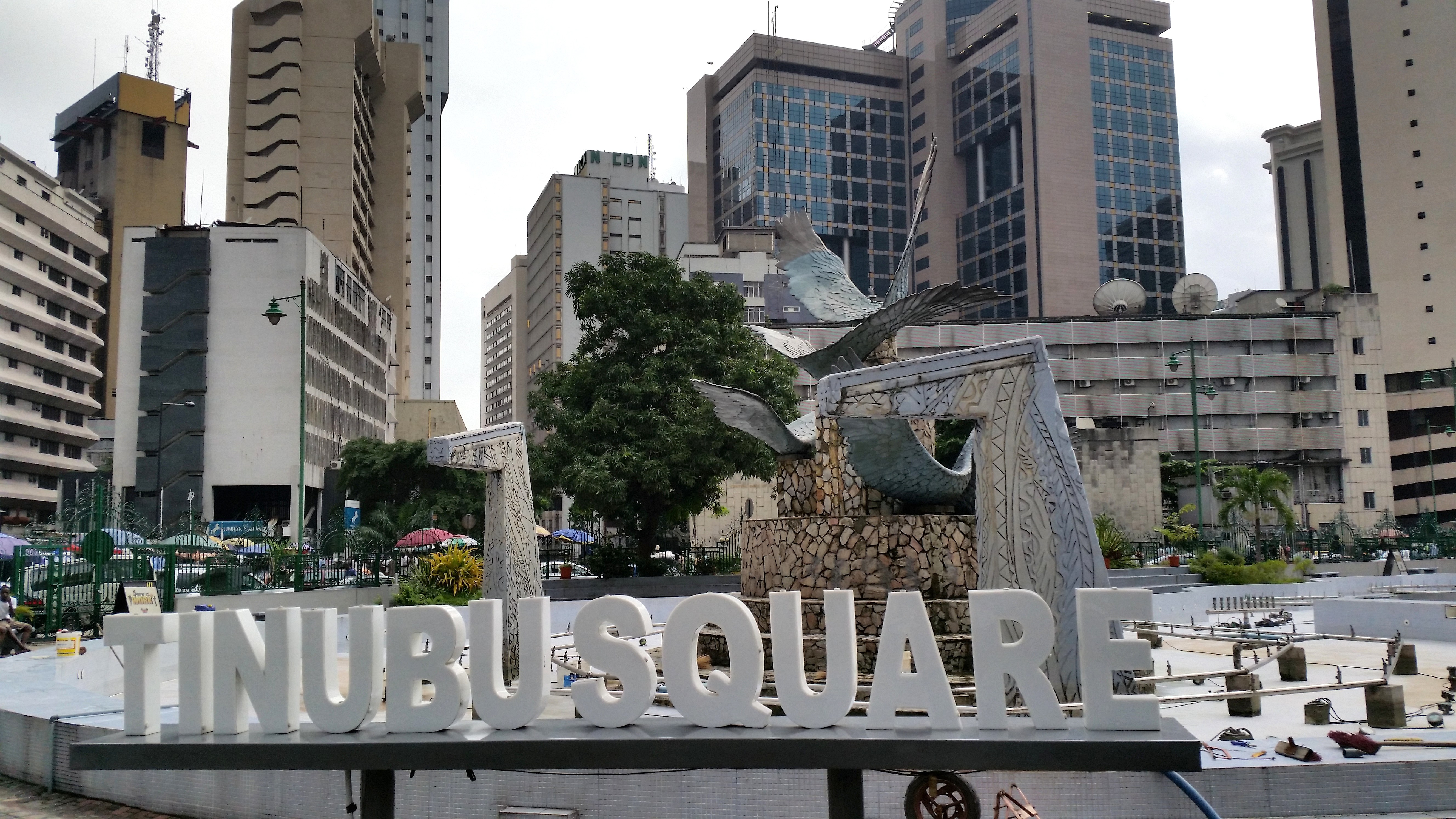
Cover photo: 2014 Tinubu Square Lagos Nigeria 14640600637 — Jeremy Weate from Abuja, Nigeria / Wikimedia Commons, licensed CC BY 2.0 (cropped; license: https://creativecommons.org/licenses/by/2.0).