The enforcement
The Nigerian Communications Commission (NCC) has enforced an enhanced Device Checker and Type Approval Compliance framework, disconnecting unverified SIM-enabled devices from telecom networks, Nigeria Communications Week reports. The enforcement covers all SIM-enabled hardware connecting to Nigerian mobile networks — smartphones, feature phones, Point-of-Sale (PoS) terminals, modems, routers, cellular tablets and IoT devices.
Users with unverified hardware are alerted through automated warning SMS messages and given 30 cumulative days to resolve the compliance issue before losing network connectivity, according to the report. Devices already active on Nigerian networks before the October rollout — roughly 231 million of them, per the NCC — were automatically captured in the system without requiring subscriber action. The policy primarily targets newly imported, counterfeit, cloned or unapproved devices entering the market.
Nigeria Communications Week puts the number of phones already disconnected in the millions. The Commission has not published an official disconnection count; the figure is the newspaper's.
What the rule requires
In a notice signed by Nnenna Ukoha, director of public affairs, the NCC reminded original equipment manufacturers (OEMs), original device manufacturers (ODMs), importers, distributors, dealers and retailers of their statutory obligations under the Nigerian Communications Act 2003, the Type Approval Regulations 2024 and the Type Approval Business Rules 2024. All device models intended for importation, assembly, distribution or sale in Nigeria must have obtained NCC Type Approval, as outlined in Section 132 of the Act and Regulation 4 of the Type Approval Regulations 2024.
Beyond model approval, individual devices must be verified: OEMs, ODMs and importers must submit International Mobile Equipment Identity (IMEI) information through the approved compliance process before sale and distribution. Distributors and retailers are told to confirm that existing stock meets type-approval and verification requirements, and new imports must comply before being placed on the market. Devices that fail the requirements “may be restricted from accessing Nigerian mobile telecommunications networks” under the enforcement framework, the notice says — the mechanism now visibly in use.
AI-assisted analysis
Machine-synthesised- Fact
The NCC has enforced an enhanced Device Checker and Type Approval Compliance framework under which unverified SIM-enabled devices are being disconnected from telecom networks; the enforcement covers smartphones, feature phones, PoS terminals, modems, routers, cellular tablets and IoT devices.
Source: Nigeria Communications Week(opens in a new tab) - Figure
Users with unverified hardware receive automated warning SMS messages and have 30 cumulative days to resolve the compliance issue before losing network connectivity, and roughly 231 million devices already active on Nigerian networks before the October rollout were automatically captured in the system without subscriber action; the policy primarily targets newly imported, counterfeit, cloned or unapproved devices.
Source: Nigeria Communications Week(opens in a new tab) - Figure
Nigeria Communications Week reports that millions of unverified SIM-enabled devices have been disconnected; the NCC has not published an official disconnection count.
Source: Nigeria Communications Week(opens in a new tab) - Fact
The enforcement is grounded in Section 132(2) of the Nigerian Communications Act 2003 and the Type Approval Regulations 2024, checks hardware IMEI numbers in collaboration with the Nigeria Customs Service, and the NCC has clarified that it verifies device compliance only — it does not track user locations or access personal messages, photos or financial data.
Source: Nigeria Communications Week(opens in a new tab)
Synthesised by PulseGrid's editorial AI from the sourced claims in this article and reviewed by PulseGrid AI Desk. How we use AI.
Partner content · paid placement
Sponsored tile inventory: Q1 2027
Native tiles in the in-feed carousel and the article block, sold only with the visible Sponsored / Partner Content label. Slot sizes, positions and advertiser terms are published on the advertise page. No newsroom byline is ever attached to partner copy.
The checks run on hardware IMEI numbers in collaboration with the Nigeria Customs Service — which the NCC says will also support reconciliation of import records, compliance with applicable duties, and fair competition between compliant and non-compliant importers. The Commission has clarified that it verifies device compliance only: it does not track user locations or access personal messages, photos or financial data. Compliance guidance is published at ncc.gov.ng/DeviceCheckerGuide, or by calling 315.
Why it matters
This is the largest device-compliance enforcement action in Nigeria's mobile market. The direct consumer impact falls on grey-market and counterfeit hardware: handsets that entered the country without type approval now face a hard cut-off rather than a paperwork inconvenience. For the device trade — importers, distributors, dealers — the IMEI-level verification requirement moves compliance upstream to before-sale submission, with Customs reconciliation as a backstop.
It also hardens the regime that operators' subscriber counts live under. The 231-million-device grandfather clause means the first wave of disconnections is concentrated in newly imported and illegitimate hardware rather than established users — but any sustained enforcement against non-verified devices will eventually show up in the NCC's monthly active-subscription series, which only in September 2026 crossed 200 million lines.
For the AI and fintech stacks building on local infrastructure, verified-device supply chains matter: PoS terminals, routers and cellular IoT modules are explicitly in scope, and enterprise deployments will need type-approved hardware to stay connected.
What to watch
An official NCC enforcement statistic. The “millions” of disconnected devices is currently a press figure; the Commission's own numbers will set the real scope.
Dealer and importer behaviour: how quickly existing stock is brought into compliance, and whether enforcement bites harder on the counterfeit trade than on ordinary consumers.
The monthly NCC industry statistics — whether the type-approval push dents active-line growth, or simply swaps grey-market SIMs for verified ones.
The October rollout's wider cadence: the NCC notice says devices failing requirements “may be” restricted “upon full implementation,” so the pace of enforcement is itself a policy dial.
Bottom line
Nigeria has moved device compliance from a registration exercise to network-level enforcement — IMEI by IMEI, with Customs at the back door and a 30-day clock at the front. The regime is now among the strictest in Africa for SIM-enabled hardware.
PulseGrid will track official enforcement figures and any reflection in the monthly subscription data.
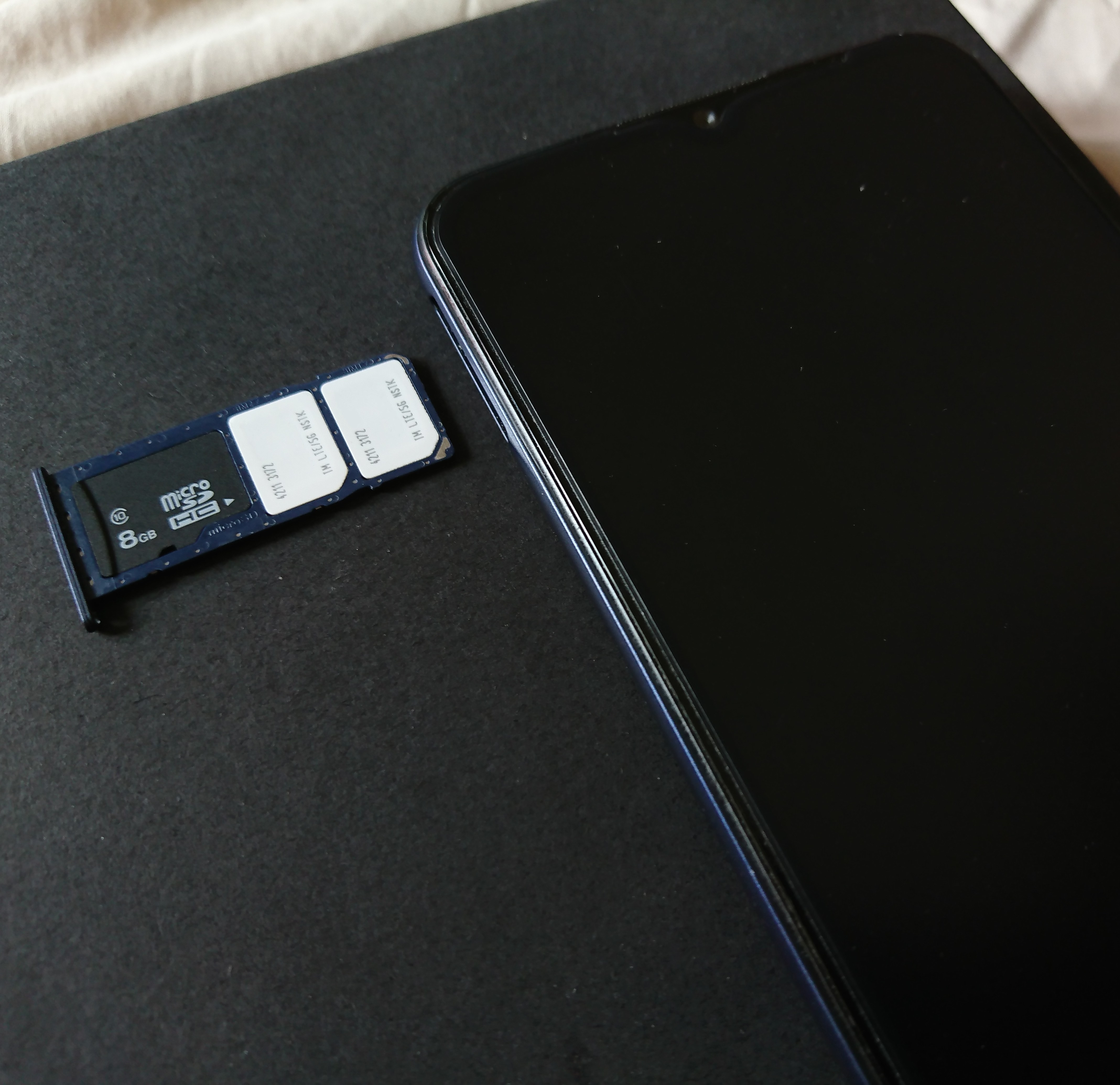
Cover photo: Dual SIM on modern smartphone — Paowee / Wikimedia Commons, licensed CC BY-SA 4.0 (cropped; license: https://creativecommons.org/licenses/by-sa/4.0).