The pitch: compute demand needs capital
Jera Co., Japan's largest electricity producer, is weighing ways to fund expansion — including a possible initial public offering — with the AI boom at the centre of the argument, according to a Bloomberg interview with global chief executive officer and chairman Yukio Kani in Tokyo.
“We require a lot of cash,” Kani said. “We really need to build power stations, strengthen LNG terminals — everything throughout the whole LNG value chain.” Kani said power demand is growing globally and that rapid AI development is creating a new source of consumption, increasing the need to secure funds for expansion.
Jera is jointly owned by utilities Tokyo Electric Power Co. and Chubu Electric Power Co. The company has long considered an IPO without ever having announced such a plan; asked where discussions over a listing stand, Kani declined to provide details, saying only that Jera was talking to its shareholders about ways to maximize value.
The Chiba template: a 400MW data centre at the power plant
The clearest expression of Jera's compute thesis is a project announced last month: a collaboration with Dell Technologies Inc. and UK developer RHAELM Holdings Ltd. to develop AI infrastructure, starting with a 400-megawatt data centre near Jera's Chiba thermal power station outside Tokyo. The overall project is expected to involve about $15 billion of investment, with Jera focused on supplying power rather than investing directly in the data centre.
The memorandum of understanding, unveiled on 10 November, is broader than a single site. The parties aim to build a standardised, repeatable framework for AI infrastructure at national scale in Japan — integrating power generation, electrical infrastructure, cooling and AI compute instead of designing each project from scratch — with Apollo Global Management intended to serve as strategic investment and financing partner for RHAELM on the first Chiba project. The model would be established first in Japan and, over time, explored in other markets.
AI-assisted analysis
Machine-synthesised- Quote
Jera Co., Japan's biggest electricity producer, is considering ways to raise funds for expansion including a possible IPO, with global CEO and chairman Yukio Kani citing growing power demand and AI as a new source of consumption: “We require a lot of cash. We really need to build power stations, strengthen LNG terminals — everything throughout the whole LNG value chain.”
Source: Bloomberg (syndicated via Energy Connects)(opens in a new tab) - Fact
Jera is jointly owned by Tokyo Electric Power Co. and Chubu Electric Power Co. and has long considered an IPO without ever having announced such a plan; asked where discussions over a listing stand, Kani declined to provide details, saying only that Jera was talking to its shareholders about ways to maximize value.
Source: Bloomberg (syndicated via Energy Connects)(opens in a new tab) - Fact
Jera announced in October–November 2026 that it will work with Dell Technologies and UK developer RHAELM Holdings on AI infrastructure starting with a 400-megawatt data centre near its Chiba thermal power station outside Tokyo, with about $15 billion of overall project investment; Jera's role is supplying power rather than investing directly in the data centre, and Apollo Global Management intends to serve as strategic investment and financing partner for RHAELM on the Chiba project.
Source: Intelligent CXO(opens in a new tab) - Fact
In May 2024 Jera unveiled a ¥5 trillion ($31 billion) investment plan through 2035 focused on LNG, renewable energy and hydrogen and ammonia; the subsequent growth of data centres — a “new dimension,” according to Kani — has prompted the company to reassess how it allocates and raises capital.
Source: Bloomberg (syndicated via Energy Connects)(opens in a new tab)
Synthesised by PulseGrid's editorial AI from the sourced claims in this article and reviewed by PulseGrid AI Desk. How we use AI.
Partner content · paid placement
Sponsored tile inventory: Q1 2027
Native tiles in the in-feed carousel and the article block, sold only with the visible Sponsored / Partner Content label. Slot sizes, positions and advertiser terms are published on the advertise page. No newsroom byline is ever attached to partner copy.
The backdrop is a capital plan that the compute boom has forced Jera to reassess. In May 2024 the company unveiled a ¥5 trillion ($31 billion) investment plan through 2035 focused on LNG, renewable energy, and hydrogen and ammonia. The subsequent growth of data centres — a “new dimension,” in Kani's words — has prompted the company to rethink how it allocates and raises capital.
Why a utility going to market matters
The AI buildout has mostly been narrated as a chip and data-centre story — Nvidia's guidance, neocloud balance sheets, Anthropic's debut. Jera is the electricity side of the same trade: a power producer concluding that compute-driven demand is large enough to reshape its corporate capital structure, and that funding it may require public markets rather than shareholder allocations alone.
Kani positioned Jera across the energy value chain — upstream projects, shipping, LNG terminals and trading. “We sit in the middle,” he said. “There's huge potential out there.” Power producers globally face the same squeeze as technology companies race to secure electricity for training large models and running inference at scale.
The structure of the Chiba project is the interesting part for other utilities: Jera monetises its generation and LNG position as the power supplier to compute, while developers and financiers carry the data-centre risk. That is a template a gas-heavy utility can execute without becoming a technology company — and it converts stranded-adjacent thermal assets into AI-era anchor demand.
What to watch
Whether Jera ever announces a formal IPO plan. For now this is consideration and shareholder discussion only — Kani gave no timeline, and no listing plan has been announced.
The TEPCO and Chubu Electric angle: a listing would reprice the utilities' stakes in their own joint venture, so “maximizing value” may mean options other than a float.
Chiba project milestones — financial close, the RHAELM–Apollo financing, and the first 400MW — as the proof case for the standardised model the MoU describes.
Peer behaviour: Bloomberg reported this month that Envision is weighing adding a data-centre power unit to its own IPO plan — early evidence that compute demand is pushing power assets toward public markets across the region.
Bottom line
When a country's largest power producer says AI demand has changed how it raises capital — “we require a lot of cash” — the compute buildout has stopped being a technology-sector story. The power industry is now repricing itself around it.
PulseGrid will track whether Jera formalises a listing plan and how the Chiba project's financing closes.
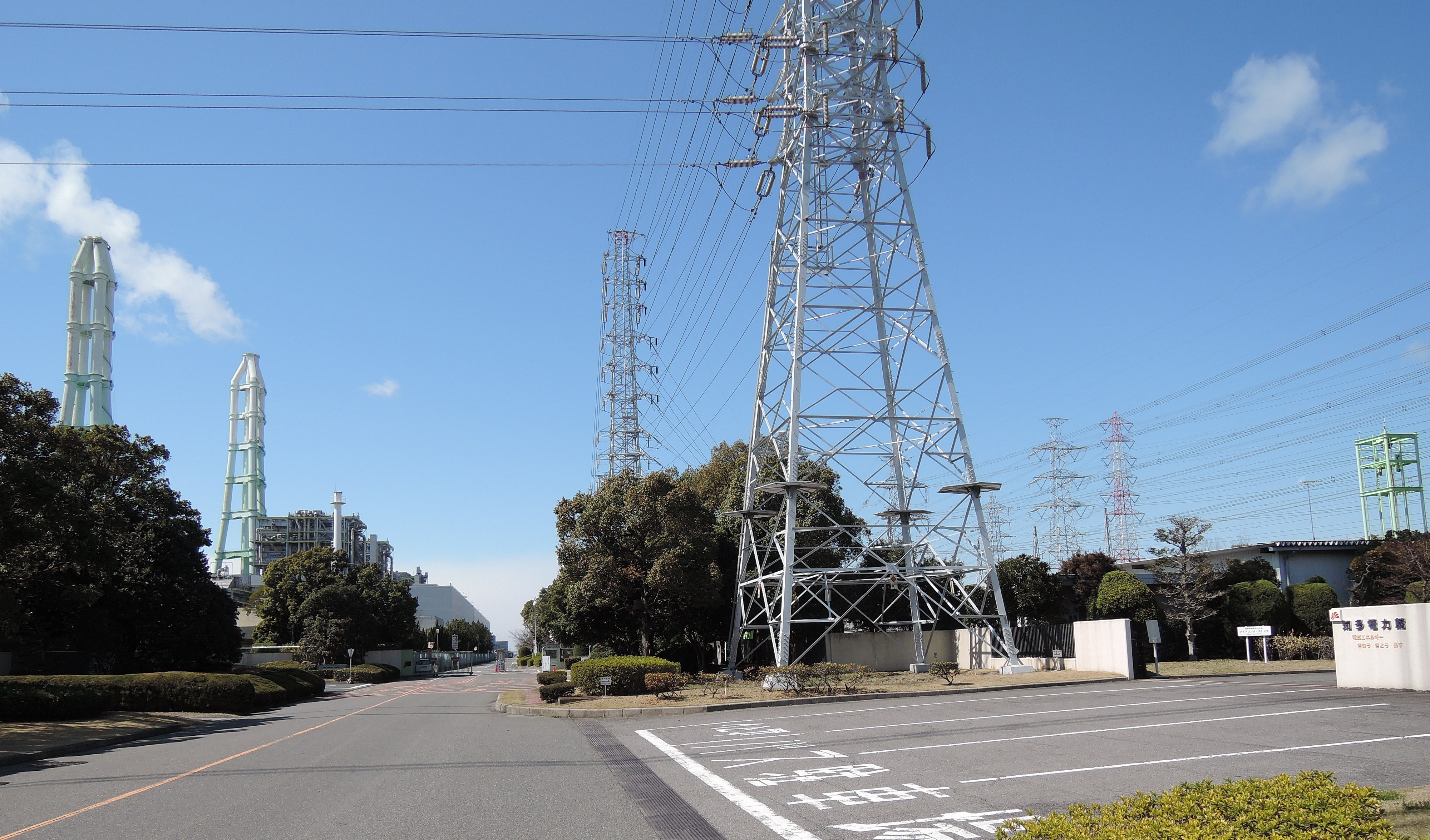
Cover photo: Chita Thermal Power Station — アラツク / Wikimedia Commons, licensed CC BY-SA 4.0 (cropped; license: https://creativecommons.org/licenses/by-sa/4.0).