The pitch
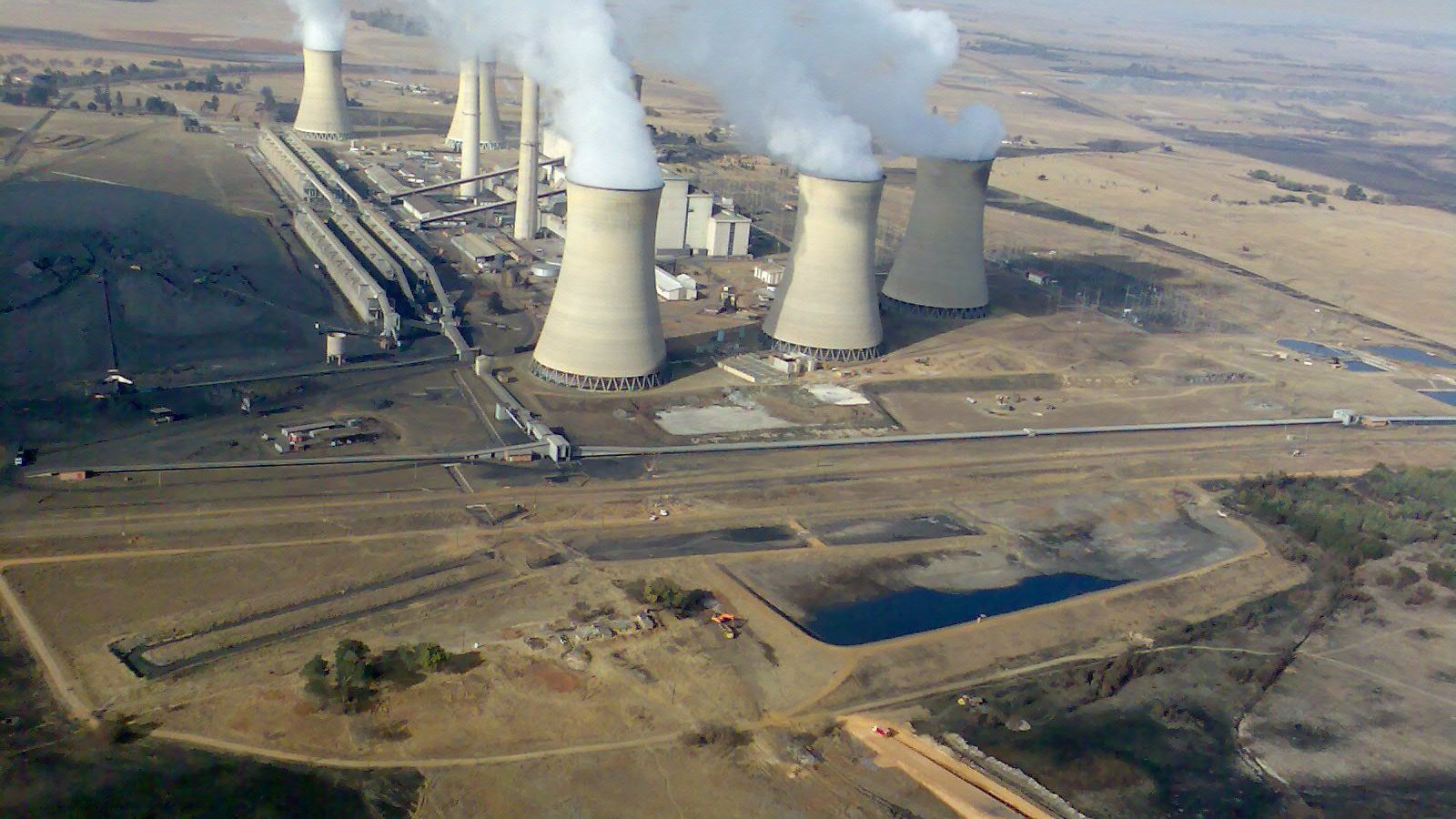
South Africa is studying whether its retiring power stations could host its next industry. Addressing the South Africa and the AI Opportunity Conference in San Jose, California, during a working visit to Silicon Valley, President Cyril Ramaphosa proposed redeveloping industrial sites that are approaching the end of their operational lives — including power station sites — for data centers, advanced manufacturing and digital industries.
"We have substantial energy resources, including some of the world's best solar and wind resources," Ramaphosa told the conference. "We also have existing industrial sites, including power station sites approaching the end of their operational lives, that may be suitable for redevelopment." The appeal was explicit: "We invite you to invest in our digital and computing infrastructure."
The sites and the numbers
The concrete pipeline is smaller than the rhetoric. Two coal-fired plants in Mpumalanga — Hendrina and Arnot — are scheduled for decommissioning, repowering and repurposing by 2030, and neither is currently expected to become a data center. Beyond them, as many as ten more power stations are due to be decommissioned between 2040 and 2050 as South Africa moves off coal, and it is that later wave the pitch targets. The draw is what the sites already have: "valuable grid connections, transport infrastructure and other industrial facilities," in Ramaphosa's words — the scarce asset in any data-center siting race.
The grid position is unusually favourable for a country long associated with blackouts. State utility Eskom has reported roughly 6GW of surplus peak capacity — its biggest reserve margin in almost a decade — and was reported in August to be soliciting hyperscale operators to buy excess energy. South Africa is already Africa's largest data-center market: around 70 percent of the continent's installed IT capacity, 68 facilities across 42 operators concentrated in Johannesburg and Cape Town, among them Teraco, Vantage, Africa Data Centres and Equinix.
Why it matters
Ramaphosa framed the move as a correction to a familiar pattern. "Africa, which is home to nearly one-fifth of humanity, accounts for only a tiny fraction of global data center capacity," he said — arguing the continent should not repeat its history of exporting raw materials and re-importing finished goods at higher cost, and cannot remain merely a consumer of AI built elsewhere. Against US tech companies' expected AI-infrastructure investment this year — estimates he cited approaching $670 billion — the pitch is that grid-attached brownfield sites, best-in-class solar and wind, and an established operator market make South Africa the continent's realistic answer to the compute gap.
AI-assisted analysis
Machine-synthesised- Fact
President Cyril Ramaphosa, addressing the South Africa and the AI Opportunity Conference in San Jose, California, during a working visit to Silicon Valley, proposed redeveloping industrial and power station sites approaching the end of their operational lives for data centers, advanced manufacturing and digital industries, subject to planning, technical assessment and investment.
Source: The Common Sense (South Africa)(opens in a new tab) - Quote
Ramaphosa said: "We have substantial energy resources, including some of the world's best solar and wind resources. We also have existing industrial sites, including power station sites approaching the end of their operational lives, that may be suitable for redevelopment," adding that some sites "already have valuable grid connections, transport infrastructure and other industrial facilities."
Source: DataCenterDynamics(opens in a new tab) - Quote
Ramaphosa said "Africa, which is home to nearly one-fifth of humanity, accounts for only a tiny fraction of global data center capacity," and argued the continent should not repeat its pattern of exporting raw materials and importing finished products at greater cost as AI develops.
Source: DataCenterDynamics(opens in a new tab) - Fact
Two Mpumalanga coal-fired stations, Hendrina and Arnot, are scheduled for decommissioning, repowering and repurposing by 2030 and are not currently expected to become data centers; up to ten more power stations are due to be decommissioned between 2040 and 2050 as South Africa transitions away from coal.
Source: DataCenterDynamics(opens in a new tab)
Synthesised by PulseGrid's editorial AI from the sourced claims in this article and reviewed by PulseGrid AI Desk. How we use AI.
Partner content · paid placement
Sponsored tile inventory: Q1 2027
Native tiles in the in-feed carousel and the article block, sold only with the visible Sponsored / Partner Content label. Slot sizes, positions and advertiser terms are published on the advertise page. No newsroom byline is ever attached to partner copy.
It is also a signal about siting economics. As power — not land or chips — becomes the binding constraint on data-center growth globally, sites that already carry grid connections and transmission infrastructure look increasingly like the premium asset. Retiring coal plants are the extreme case of that logic: heavy existing grid attachment, known industrial land, and political demand for replacement economic activity in the host communities. One caveat noted in coverage: most of the plants sit in Mpumalanga while the best renewable resources are hundreds of kilometres away, which could complicate efforts to pair new generation with the facilities.
What to watch
The "coordinated investment proposition" for AI infrastructure that Ramaphosa said should be a practical priority from the visit — the first sign of whether the pitch becomes a program.
Any formal redevelopment plan, tender or offtake structure for Hendrina and Arnot after 2030, and for the 2040–2050 decommissioning wave.
Eskom's hyperscale offtake negotiations — whether surplus-power sales convert into anchor tenants for brownfield sites.
How the incumbents respond: Teraco, Vantage, Africa Data Centres and Equinix all already cluster in Johannesburg and Cape Town, and would be natural bidders for grid-attached sites.
Bottom line
For now this is a presidential pitch, not a committed program — no site has been designated, and the first two plants due to retire are not slated for data centers. But the underlying asset list is real: surplus generation, grid connections on existing industrial land, and a market that already holds roughly 70 percent of Africa's data-center capacity. If the coordinated investment proposition follows, "coal to compute" becomes South Africa's clearest data-center thesis yet.
Cover photo: South Africa-Mpumalanga-Middelburg-Arnot Power Station01.jpg — Gerhard Roux / Wikimedia Commons, licensed CC BY-SA 4.0 (cropped; license: https://creativecommons.org/licenses/by-sa/4.0).