The mismatch in timing
Data center power demand has grown an average of 19% a year since 2000 while US grid capacity has expanded just 2% annually, according to an analysis by insurance broker Howden, summarized by Fortune on November 22. Data center electricity use is growing roughly ten times faster than the system built to supply it — a gap Grid Strategies president Rob Gramlich calls a "mismatch in timing" between how fast data centers want power and how fast the grid can expand, after roughly 25 years in which utilities, in his words, "got out of practice on building new infrastructure."
Data centers took about 5% of US grid capacity in 2025. Howden estimates that holding that share through 2030 at current growth rates would require sourcing up to 58% of their power off-grid — roughly 110 gigawatts — a level the firm itself considers unlikely. Lawrence Berkeley National Laboratory, meanwhile, projects data centers could consume as much as 12% of US electricity by 2028, about six times their 1.9% share in 2018.
Who actually pays: the Cornell ledger
The sharpest accounting of the cost shift comes from Cornell engineers Cheng Feng and Fengqi You, whose study published November 9 in Nature Energy analyzed energy demand and infrastructure projects across four major US grids from 2020 to 2025 — the southern San Francisco Bay Area, north Texas around Dallas–Fort Worth, the Midwest and the mid-Atlantic including northern Virginia — drawing on data from 4,000 existing and proposed data centers, power-price records, utility rate filings and federal household data.
Their headline finding: across the four grids, data centers paid only 38% of the infrastructure costs linked to their growth in 2025 — $3.12 billion of an $8.25 billion bill. The remaining $5.13 billion, or 62%, fell largely on residents, with the lowest-income households seeing extra energy costs reaching up to 28% of their incomes. Transmission investment across the four regions rose from $2 billion in 2020 to $34 billion in 2025, with data centers driving much of the increase.
Wholesale power prices moved the same way. In the most-affected hubs, data center growth raised wholesale prices by nearly 10% or more by 2025 — roughly 20% in California's southern Bay Area, approaching 17% around Dallas–Fort Worth, and 15% in Virginia. In New York and New England, where data center construction has been limited, the researchers found no clear price increase attributable to data center expansion.
AI-assisted analysis
Machine-synthesised- Figure
Data center power demand has risen an average of 19% a year since 2000 while US grid capacity has expanded just 2% annually — data center electricity use is growing roughly 10 times faster than the system meant to supply it, per an analysis by insurance broker Howden.
Source: Fortune(opens in a new tab) - Figure
Data centers took about 5% of US grid capacity in 2025; Howden estimates that holding that share through 2030 at current growth rates would require up to 58% of their power sourced off-grid — roughly 110 gigawatts — a level the firm itself considers unlikely.
Source: Fortune(opens in a new tab) - Figure
Lawrence Berkeley National Laboratory projects data centers could use as much as 12% of US electricity by 2028, about six times their 1.9% share in 2018.
Source: Fortune(opens in a new tab) - Figure
Across four major US grids, data centers paid only 38% of the infrastructure costs linked to their growth in 2025 — $3.12 billion of an $8.25 billion bill — with the remaining $5.13 billion falling largely on residents and the lowest-income households seeing extra energy costs up to 28% of their incomes.
Source: Cornell Chronicle(opens in a new tab)
Synthesised by PulseGrid's editorial AI from the sourced claims in this article and reviewed by PulseGrid AI Desk. How we use AI.
Partner content · paid placement
Sponsored tile inventory: Q1 2027
Native tiles in the in-feed carousel and the article block, sold only with the visible Sponsored / Partner Content label. Slot sizes, positions and advertiser terms are published on the advertise page. No newsroom byline is ever attached to partner copy.
The cost allocation is a structural artifact, You explained: grid cost-sharing rules apportion infrastructure expenses by previous consumption patterns — but a data center must expand the grid before it draws power. "It's kind of a chicken-and-egg problem," You said. "Before they build, they're not using energy. So with this model of relying on past consumption, households end up taking on much of the infrastructure costs." The reach is interstate: residents of New Jersey, Pennsylvania and Ohio help pay for grid upgrades linked to data center growth in Virginia. "You do not have to live next to a data center to help pay for its power infrastructure," You said.
Delays, gas turbines and voter backlash
The physical gap is now converting into schedule risk. Kathryn Burke, who leads US specialty energy and power growth at insurance broker Marsh, told Fortune she expects around 50% to 60% of data center projects to be delayed beyond the one-to-two-year timelines developers are counting on. On the supply side, BloombergNEF counted just 2 gigawatts of on-site gas generation operating at data centers worldwide as of March — against 181 gigawatts of announced gas-fired generation proposed alongside data centers, more than 90% of it in the US.
Politics is closing in behind the physics. On November 3, voters rejected data center development in 40 of 41 local ballot measures where it appeared, according to an Al Jazeera tally cited by Fortune. A University of Pennsylvania Annenberg Public Policy Center survey this summer found 70% of adults under 30 oppose new data centers in their area, against 61% of all adults. Virginia sells 59% of its electricity to commercial customers, and as of 2025 commercial energy demand exceeds residential demand in 23 states and Washington, D.C.
The policy response is "bring your own power." In August Delaware became the first state to legislatively enact a bring-your-own-generation policy, requiring large energy users such as data centers to produce or secure 100% of the power they use within 10 years of starting operations. President Trump's non-binding Ratepayer Protection Pledge asks signers to "build, bring, or buy" the new generation they need — Amazon, Google, Meta, Microsoft, OpenAI, Oracle and xAI signed in March, joined since by more than 200 utilities, cooperatives, developers and Republican governors.
The other side of the ledger
The Cornell study also credits the boom: each gigawatt of data center capacity can create about 15,000 jobs across the economy, with an average of 2,700 jobs directly associated with the data center itself, and state incentives have sometimes paid back richly — California reaped $180 in worker income for every dollar spent, Virginia $2. But returns tracked the presence of an existing qualified workforce more than the size of incentive spending, and rural residents absorbed proportionally higher bills: the share of rural families spending more than 6% of their incomes on energy rose 76% more than among urban residents — the same rural population that reports the lowest AI tool usage.
You and Feng's proposed fixes are concrete: data centers curtailing power during the 22 peak demand hours a year would relieve grid strain in all four regions and minimize expansion needs; states could charge data centers directly for the new demand they add, or direct funds to low-income households as a recent Minnesota law does; and tax incentives could be tied to job creation and wage levels. Six states have recently set special terms for very large energy consumers.
Bottom line
The AI buildout's power bill is being socialized through legacy cost-allocation rules faster than any rate case can adjust it: data centers paid 38 cents of every dollar of infrastructure cost their growth triggered in 2025, and the shortfall landed disproportionately on the households least likely to use what the data centers sell. As Howden's 58% off-grid scenario and Marsh's 50–60% delay call suggest, the same mismatch that is inflating residential bills is also the industry's biggest schedule risk — which is why "bring your own power" is fast becoming the entry ticket to the sector, from Delaware's statute to the White House pledge to the 181GW of gas generation announced alongside data centers worldwide.
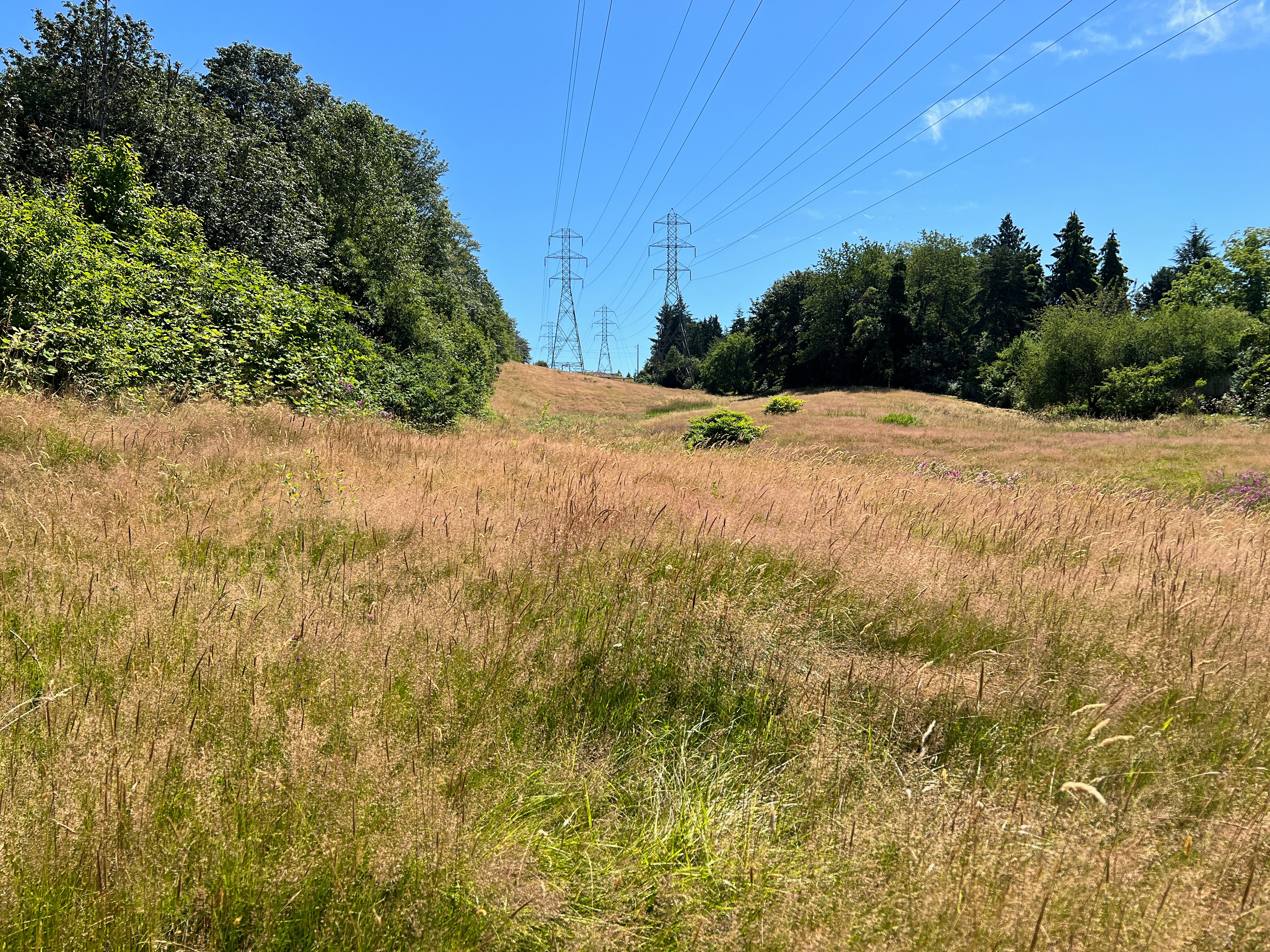
Cover photo: Grassy meadow beneath power lines and transmission towers, Rainier Beach, Seattle — Z3lvs / Wikimedia Commons (CC0, cropped; no rights reserved).