The campaign
Kaspersky's Global Research and Analysis Team (GReAT) disclosed Operation ShadowCloud on November 16, an active cyber-espionage campaign targeting government organisations in Southeast Asia, Africa and Central Asia. The operators break into Windows machines — possibly reusing an existing infection — then abuse MeshCentral, a legitimate web-based remote-management tool, to place three files on the victim's computer: a legitimate program, a malicious DLL and an encrypted malware file.
The malicious DLL is loaded by the legitimate program — the DLL sideloading technique — then decrypts and launches one of two previously undocumented backdoors: GitDoor or GraphDoor. The backdoors collect system information and connect to cloud services including GitHub, Microsoft SharePoint and Ably to send data and receive commands, letting the traffic blend in with normal business activity.
What the backdoors can do
Once inside, the operators can monitor and control compromised Windows systems extensively: recording keystrokes, capturing screenshots, moving, searching, uploading and downloading files, executing commands, managing Windows services, network connections and firewall rules, manipulating processes and the registry, and extracting credentials from memory. Kaspersky says the attackers also search for WhatsApp database decryption keys.
Trade coverage added that the modular backdoors support shellcode execution and downloading additional plugins, and deploy SOCKS5 proxies — capabilities that let a foothold be extended quietly inside a government network.
Attribution — and why the tradecraft matters
Kaspersky found evidence of possible links to Chinese-speaking threat groups, naming FamousSparrow and CopperTurtle; SC Media's summary of the research also lists tactical overlap with Bronze Sandcastle. The attribution remains unconfirmed — Kaspersky describes overlaps, not proof.
AI-assisted analysis
Machine-synthesised- Fact
Kaspersky's Global Research and Analysis Team (GReAT) uncovered Operation ShadowCloud, an active cyber-espionage campaign targeting government organizations in Southeast Asia, Africa and Central Asia, announced in a press release dated November 16, 2026.
Source: Kaspersky(opens in a new tab) - Fact
The attackers abuse MeshCentral, a legitimate web-based remote-management tool, and use DLL sideloading to decrypt and launch GitDoor or GraphDoor — two previously undocumented backdoors targeting Windows computers.
Source: Kaspersky(opens in a new tab) - Fact
The GitDoor and GraphDoor backdoors communicate through GitHub, Microsoft SharePoint and Ably, and can record keystrokes, capture screenshots, manage files, services and firewall rules, extract credentials from memory, and search for WhatsApp database decryption keys.
Source: Kaspersky(opens in a new tab) - Fact
The modular backdoors support shellcode execution and downloading of additional plugins, and deploy SOCKS5 proxies; initial access is facilitated through the MeshCentral Agent with encrypted payloads injected into memory via DLL loaders.
Source: SC Media(opens in a new tab)
Synthesised by PulseGrid's editorial AI from the sourced claims in this article and reviewed by PulseGrid AI Desk. How we use AI.
Partner content · paid placement
Sponsored tile inventory: Q1 2027
Native tiles in the in-feed carousel and the article block, sold only with the visible Sponsored / Partner Content label. Slot sizes, positions and advertiser terms are published on the advertise page. No newsroom byline is ever attached to partner copy.
The defining feature of the campaign is its living-off-the-cloud design. By staging commands and exfiltration through developer and enterprise platforms — GitHub, SharePoint, Ably — the operators avoid the network signatures traditional controls look for. "This attack combines several tactics that may appear familiar but may be hard to detect using traditional network and file-based scanning," said Saurabh Sharma, Lead Security Researcher at Kaspersky GReAT, urging organisations to monitor remote-management tools, cloud APIs, unusual DLL loading and memory-based execution.
For Nigerian government agencies and public-sector suppliers, the exposure is direct: the campaign's stated targets are government networks in Africa and Asia, and its initial access runs through remote-management tooling that many IT teams treat as routine.
What to watch
Whether Kaspersky's indicators of compromise, published on Securelist, surface matching activity in Nigerian public-sector networks.
Whether MeshCentral abuse shows up in other campaigns — the tool is legitimate and widely deployed, which is exactly why it is useful to attackers.
And whether defenders shift from signature-based scanning toward behavioural monitoring of cloud APIs and remote-management traffic, as the researchers recommend.
Bottom line
Operation ShadowCloud is a reminder that the frontier of government cyber-espionage runs through trusted cloud services, not exotic malware. Two never-before-seen backdoors, delivered through a help-desk tool and hidden in GitHub and SharePoint traffic, are now actively targeting African government networks.
PulseGrid will follow the indicators as they are adopted by defenders across the region.
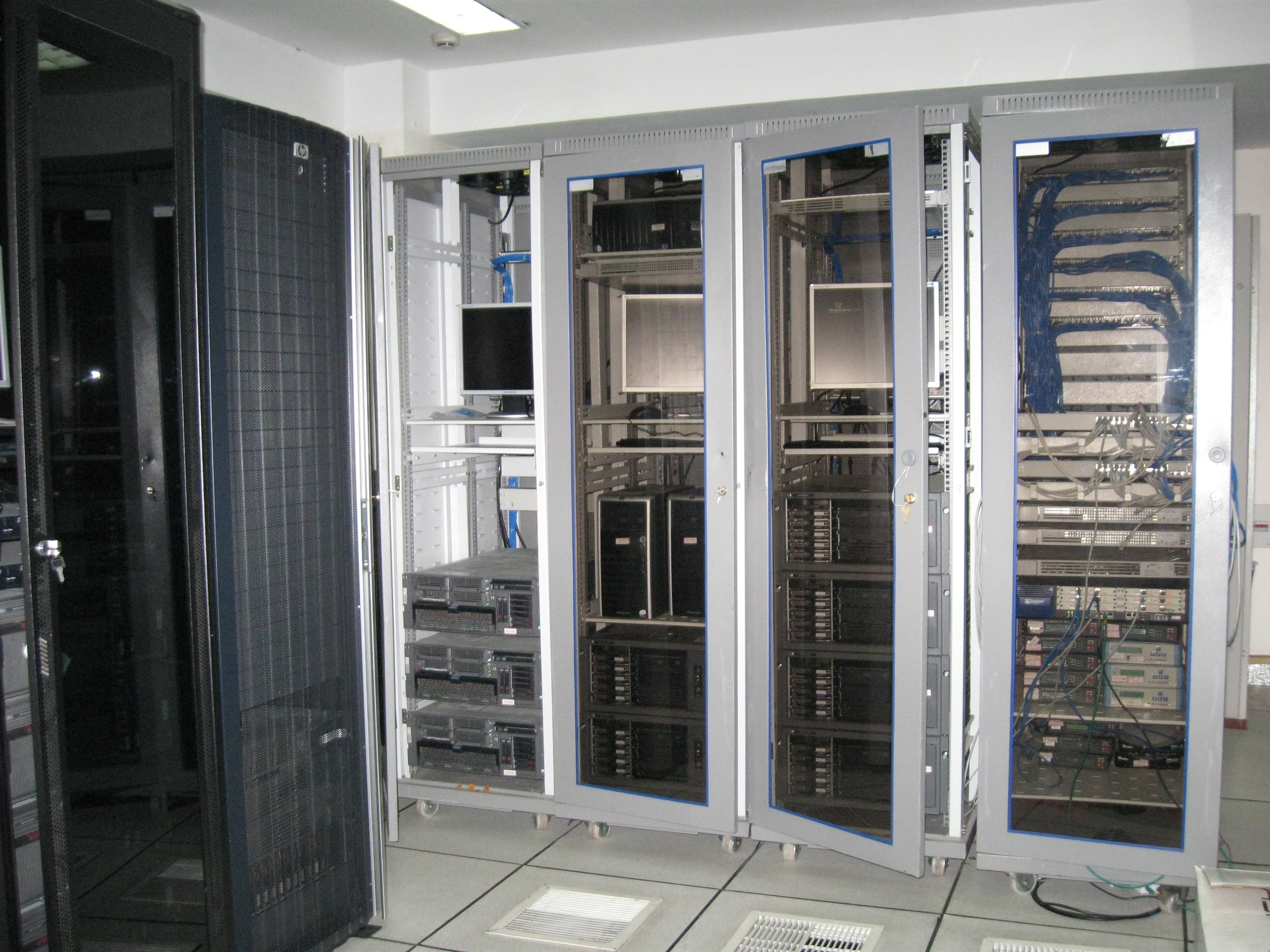
Cover photo: 139 Server Room 01 — Indrajit Das / Wikimedia Commons, licensed CC BY-SA 3.0 (cropped; license: https://creativecommons.org/licenses/by-sa/3.0).