What happened
South African mortgage provider SA Home Loans (SAHL) has warned customers that an unknown third party gained access to some of its systems — including one used for collections — in an incident detected on Nov 13, 2026. The information accessed may include customers' names, bank account numbers and branch codes, and some details of payments made by the company.
SAHL says its investigation to date shows no evidence that anyone accessed customers' home loan accounts, that customer records were altered, or that any financial loss occurred. "We do not know the identity of the threat actor at this stage," the company said. The full scope of the November incident is still being investigated.
The response
SAHL says it activated its incident response plan immediately, contained the threat actor, removed their access and secured the affected systems. It has engaged independent cybersecurity forensic specialists, heightened security monitoring, and notified the Information Regulator as the Protection of Personal Information Act (Popia) requires, along with other relevant regulators including law enforcement. The company has been directing customers to a security notice on its website by SMS.
The customer-facing warnings are blunt about what a name, bank account number and branch code can be used for: fraudulent debit orders, phishing emails, SMSes and calls impersonating SAHL or the customer's bank, and possible publication of the stolen information online. SAHL advised customers to monitor bank statements and dispute unfamiliar debit orders, never share PINs, one-time PINs or passwords, and consider a free credit report or protective registration through the Southern African Fraud Prevention Service. Where identity numbers were involved, the company said there is a small risk of identity fraud, though it has no evidence of misuse.
Second breach in a quarter — and a different perimeter
This is the second customer-data exposure affecting SA Home Loans this year. In September, a breach at RelyComply — the financial-regulation compliance firm SAHL used for verification checks including anti-money-laundering screening under the Financial Intelligence Centre Act — exposed customer data. The cyber-extortion group Dire Wolf claimed responsibility for breaching RelyComply's production database and Amazon S3 storage, exfiltrating 200GB of data; other confirmed-affected companies included Bidvest Bank, EasyEquities, Peregrine Capital, Satrix and Alexforbes, with knock-on effects at Peach Payments and VodaPay customers via Bidvest Bank.
AI-assisted analysis
Machine-synthesised- Fact
SA Home Loans detected unauthorised access by an unknown third party to certain of its systems on Nov 13, 2026, including a system used for collections; the information accessed may include customers' names, bank account numbers and branch codes and some details of payments made by the company.
Source: TechCentral (Duncan McLeod)(opens in a new tab) - Fact
SA Home Loans said there was no evidence of any access to customers' home loan accounts, no evidence that customer records were altered, no financial loss identified, and that it does not know the identity of the threat actor at this stage.
Source: MyBroadband(opens in a new tab) - Fact
SA Home Loans contained the incident, removed the attacker's access, secured the affected systems, engaged independent cybersecurity forensic specialists, heightened security monitoring, and notified the Information Regulator and other relevant regulators including law enforcement, as Popia requires.
Source: TechCentral (Duncan McLeod)(opens in a new tab) - Fact
This is SA Home Loans' second customer-data exposure this year: in September, a breach at compliance firm RelyComply — which SAHL used for verification checks including anti-money-laundering screening under the Financial Intelligence Centre Act — exposed customer data, with the extortion group Dire Wolf claiming responsibility and 200GB exfiltrated from RelyComply's production database and Amazon S3 storage; other companies confirmed affected included Bidvest Bank, EasyEquities, Satrix and Alexforbes.
Source: MyBroadband(opens in a new tab)
Synthesised by PulseGrid's editorial AI from the sourced claims in this article and reviewed by PulseGrid AI Desk. How we use AI.
Partner content · paid placement
Sponsored tile inventory: Q1 2027
Native tiles in the in-feed carousel and the article block, sold only with the visible Sponsored / Partner Content label. Slot sizes, positions and advertiser terms are published on the advertise page. No newsroom byline is ever attached to partner copy.
That is the structural lesson of the two incidents. September's breach arrived through a third-party compliance vendor — the extended perimeter every regulated lender inherits. November's is first-party: SAHL's own systems, including a collections system that holds exactly the bank details criminals monetise. A name plus account number plus branch code is sufficient to attempt a debit order — which is why the company's notice leads with debit-order fraud rather than the more common identity-theft framing.
What to watch
Scope disclosure: how many customers are actually affected once the investigation concludes — the notice currently covers the categories of data, not the count.
The Information Regulator's next move: Popia breach notification has landed; regulator statements or enforcement action would set the tone for SA financial-services breach response.
Whether the two incidents are treated as one pattern by the market — compliance-vendor risk plus core-system risk — in procurement and audit responses across SA lending.
Bottom line
Two customer-data exposures in three months, from two different perimeters, at one mortgage lender. The November incident is the more uncomfortable of the two: it is SAHL's own systems, it reached collections data that maps directly onto debit-order fraud, and the threat actor is still unidentified. The company's disclosure is prompt and its customer guidance is concrete — but the count of affected customers, and the regulator's read on a repeat-hit lender, are the numbers that will decide how much this costs.
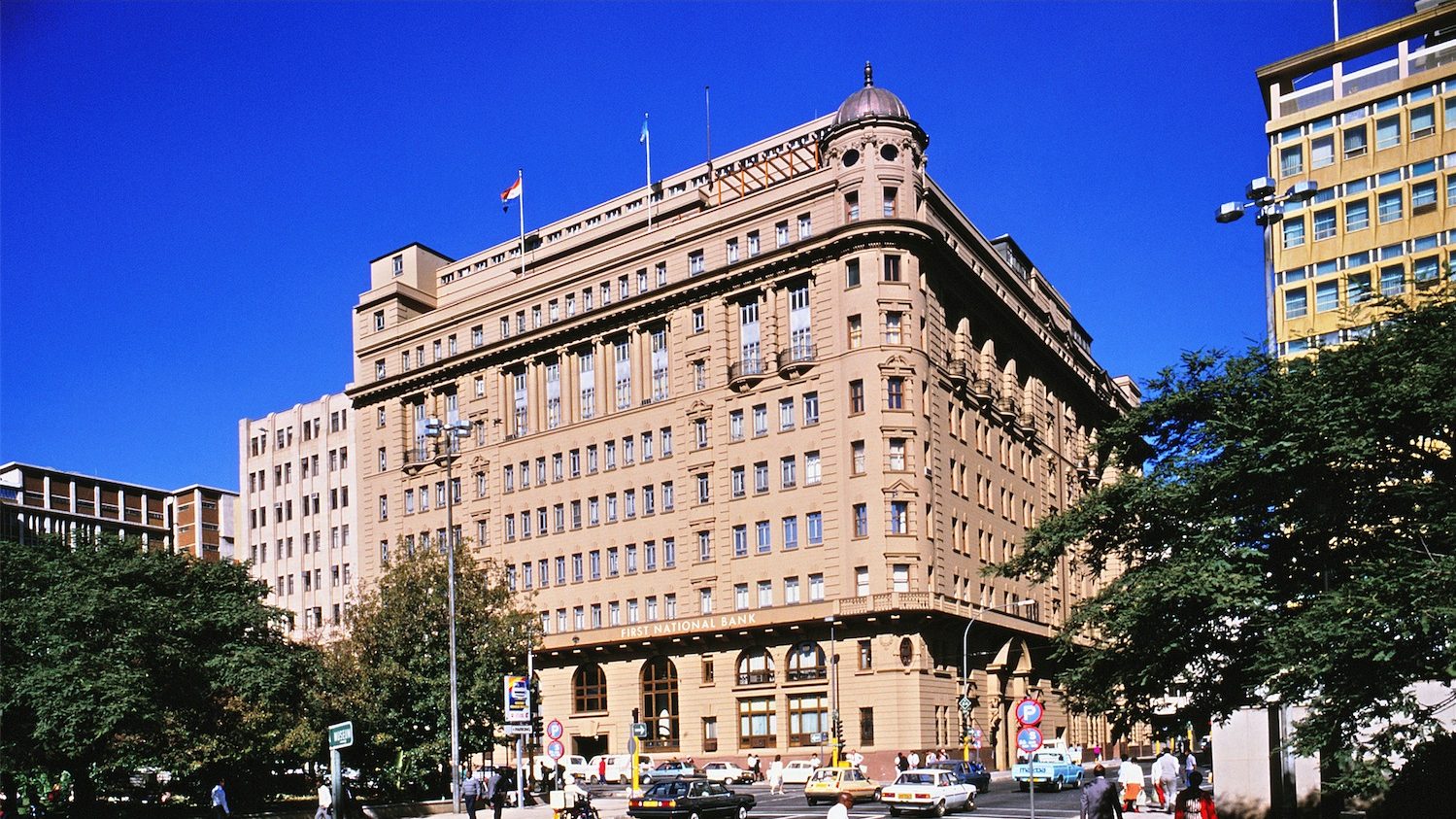
Cover photo: 00000-CornerHouse-National Bank Building-Cnr Simmonds & Market Streets-Johannesburg-s.jpg — Janek Szymanowski / Wikimedia Commons, licensed CC BY-SA 3.0 (cropped; license: https://creativecommons.org/licenses/by-sa/3.0).