The rulebook
The Central Bank of Nigeria published its Regulations for the Operations of Non-Security Virtual Assets in Nigeria in a circular dated 5 November 2026, signed by Musa I. Jimoh, Director of the Payments System Policy Department, with effect from the same day.
The framework covers stablecoins, Deposit Money Tokens, virtual asset service providers, virtual asset payment services, platform-facilitated peer-to-peer services, and custody, transfer, remittance, clearing and settlement activity. It applies to anyone operating in or from Nigeria, directing activity at people in Nigeria, or running activity that could materially affect the payments system, the financial system, the foreign exchange market or financial stability — whether or not they have a physical presence in the country.
The timing matters for the fintech sector because dollar tokens have become plumbing rather than speculation: businesses use them to pre-fund international payments, settle with overseas suppliers and hold dollar value, and the central bank has now written down what it costs to keep doing that inside the regulated perimeter.
The capital wall
Licensed issuers must hold minimum paid-up capital of N10 billion for naira-referenced tokens, designated Class 1, and N15 billion for foreign-currency-referenced tokens, designated Class 2 — about $11 million at roughly N1,350 to the dollar, as Tech Build Africa calculated. Providers of other non-security virtual asset services face a N1 billion floor, and that amount is additional to whatever capital the Securities and Exchange Commission requires for the same service.
Capital cannot do double duty. The regulations require it to be held separately from issuer reserves, the central bank reserve deposit, customer funds and operational liquidity, in cash accounts at the CBN or in approved Federal Government securities under the Bank's control. An issuer that drops below the minimum must notify the CBN immediately and file a restoration plan within 10 business days.
AI-assisted analysis
Machine-synthesised- Fact
The Central Bank of Nigeria issued its Regulations for the Operations of Non-Security Virtual Assets in Nigeria in a circular dated 5 November 2026, signed by Musa I. Jimoh, Director of the Payments System Policy Department, with effect from the same date.
Source: Central Bank of Nigeria(opens in a new tab) - Fact
The regulations cover stablecoins, Deposit Money Tokens, virtual asset service providers, virtual asset payment services, platform-facilitated peer-to-peer services, and custody, transfer, remittance, clearing and settlement activities.
Source: Central Bank of Nigeria(opens in a new tab) - Fact
The rules apply to persons carrying out regulated activities in or from Nigeria, directing such activities at people in Nigeria, or undertaking activity that may materially affect the payments system, financial system, foreign exchange market or financial stability, including operators with no physical presence in Nigeria.
Source: Central Bank of Nigeria(opens in a new tab) - Figure
Licensed issuers must maintain minimum paid-up capital of N10 billion for naira-referenced Class 1 stablecoins and N15 billion for foreign-currency-referenced Class 2 stablecoins, while other non-security virtual asset service providers face a N1 billion floor that is additional to any capital required by the Securities and Exchange Commission.
Source: Central Bank of Nigeria(opens in a new tab)
Synthesised by PulseGrid's editorial AI from the sourced claims in this article and reviewed by PulseGrid AI Desk. How we use AI.
Partner content · paid placement
Sponsored tile inventory: Q1 2027
Native tiles in the in-feed carousel and the article block, sold only with the visible Sponsored / Partner Content label. Slot sizes, positions and advertiser terms are published on the advertise page. No newsroom byline is ever attached to partner copy.
For the wallet providers, exchanges and gateways that sit outside issuance, N1 billion is the entry ticket — but it is a ticket that has to be bought twice if the same company also holds an SEC licence.
Reserves, redemption and what a token is not
Issuers must hold eligible reserves equal to at least 100 per cent of outstanding token obligations, plus a 2 per cent buffer against losses. No new tokens may be minted unless equivalent reserve assets have already been received into the reserve pool.
Holders must be able to redeem at face value, generally no later than the next business day after a valid request, without charges on standard redemptions. Class 1 issuers must keep at least 20 per cent of the reserve pool as a non-interest-bearing cash deposit in a dedicated account at the CBN, withdrawable only with the Bank's written consent; the requirement does not apply to Class 2 issuers.
The regulations also draw a hard line around what a stablecoin is. Issuers may not pay interest, yield or dividends to holders simply for holding tokens, and the text states that stablecoins are not bank deposits and are not covered by Nigeria Deposit Insurance Corporation protection. Algorithmic stablecoins, and tokens pegged to a fiat currency but backed mainly by other crypto assets, are prohibited.
Systemic tokens, P2P and penalties
A token can be designated systemically important if its naira-equivalent circulating supply exceeds N500 billion every day for 30 consecutive days, or if it is held or used by more than five million people in Nigeria. That designation opens the door to enhanced supervisory requirements.
Peer-to-peer services are pulled into the same perimeter. A provider needs separate express CBN approval to facilitate conversions between the naira and a Class 2 stablecoin or other foreign-currency value, and the naira leg must settle through, or be reported to, an authorised dealer designated by the CBN. The text also bars structuring, splitting or routing transactions across channels to evade limits or reporting.
Enforcement is priced. Unlicensed virtual asset activity carries a minimum fine of N100 million plus N1 million for each day the violation continues; capital, reserve and liquidity breaches attract N50 million to N250 million; reserve leverage or encumbrance carries N250 million to N500 million; AML/CFT and Travel Rule failures start at N50 million; fraud or deliberate misrepresentation starts at N500 million, with possible criminal referral.
Who has to move, and by when
Foreign-currency issuers cannot serve Nigerians from abroad. Under Section 11.1 a Class 2 token can only be issued through a Nigerian-incorporated entity holding a Class 2 licence, and approvals obtained in other jurisdictions do not substitute for Nigerian requirements. The CBN also retains supervisory access to books, systems, reserve arrangements and group information.
Existing operators have 180 days from the effective date to apply for a licence, must register with the regulator within 30 days and begin supervisory reporting within 60 days. The central bank has not yet said when the 180-day clock starts.
The market has been positioning for this. TechCabal reported that the CBN opened a second cohort of its regulatory sandbox in August with a dedicated stablecoin track, that Tether advertised for a Nigeria expansion manager in August, and that Circle named former Yellow Card executive Gillian Darko as its Vice President and Head of Africa in early November. Luno, which has spent months building cross-border dollar settlement for corporate clients in South Africa, has not launched that service in Nigeria and has not said whether it will apply for a Class 2 licence.
What to watch
The 180-day application window is the operative deadline, and the start date has not been published. Watch for a commencement notice from the Payments System Policy Department.
Watch the N1 billion tier: how many wallet, gateway and custody operators can post capital that sits on top of any SEC requirement, and how many consolidate or exit instead.
Watch the naira-leg routing rule for peer-to-peer conversions. Routing the naira side through a designated authorised dealer is the mechanism that decides whether those flows are reported or pushed into channels that are not.
Watch whether a systemic designation is used early, and on which token — the N500 billion and five-million-user thresholds are the first hard numbers the CBN has published for this market.
Bottom line
This is the most detailed rulebook the CBN has written for digital assets, and its logic is consistent: keep the payment rail, own the perimeter. Local incorporation, tiered capital, monthly reserve attestation and a redemption deadline convert a token business into a licensed, examinable one.
For fintechs, the practical effect is that dollar stablecoins stop being a workaround and become a licensed product with a balance sheet attached. PulseGrid will track licence applications, the commencement date for the 180-day window, and the first systemic designation.
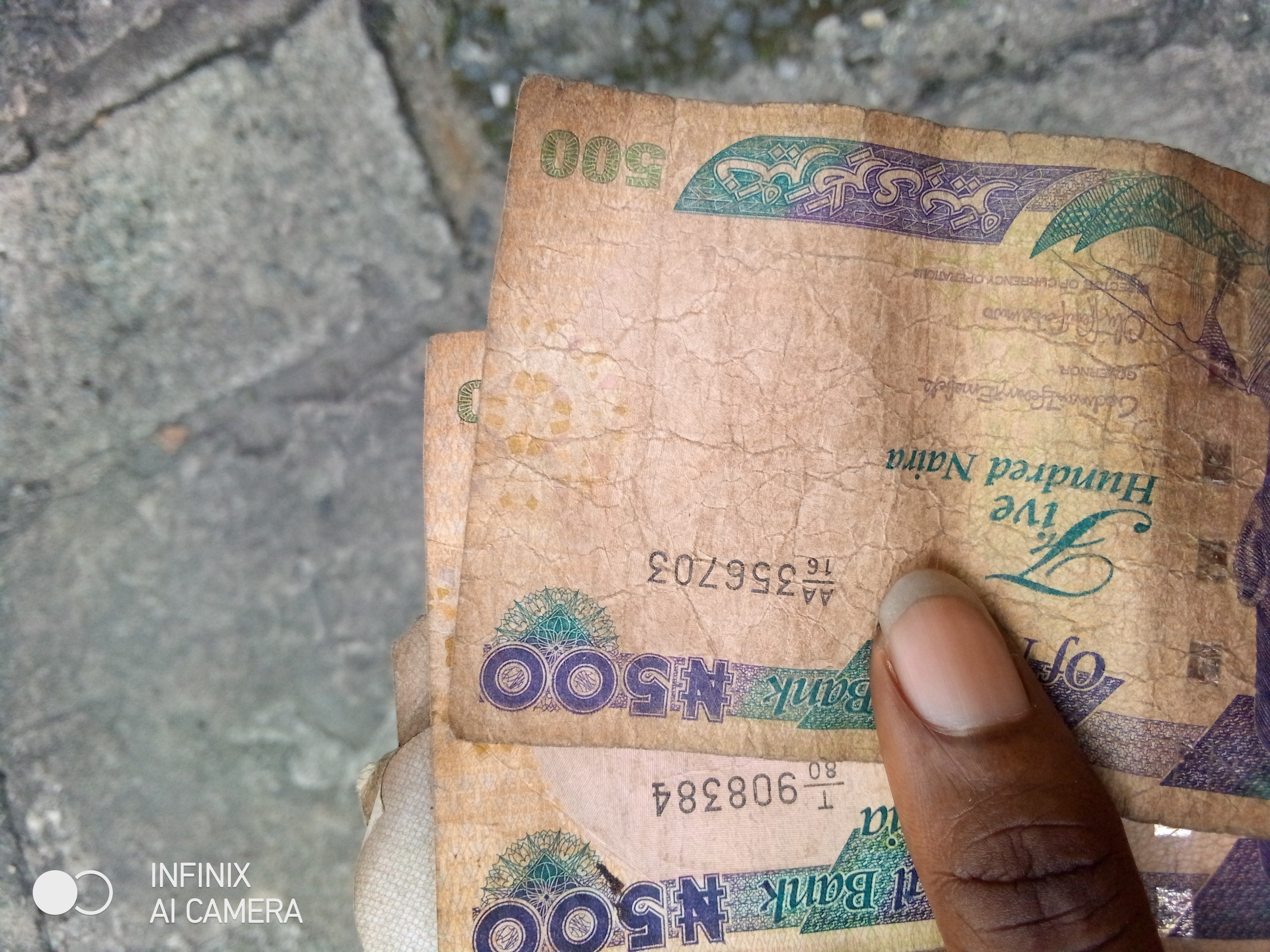
Cover photo: 500 Nigerian Notes — Weblingdevs / Wikimedia Commons, licensed CC BY-SA 4.0 (cropped; license: https://creativecommons.org/licenses/by-sa/4.0).