What Reuters reported
China's Z.AI has fallen behind schedule on its next flagship AI model, and rival Moonshot AI expects the interval between its major releases could double — from six months to a year or longer — if it loses access to overseas computing power, Reuters reported on Thursday in an exclusive citing people familiar with the matter. The previously unreported details show how two forces are squeezing the Chinese low-cost AI development model at once: anti-distillation safeguards at OpenAI and Anthropic, and Washington's latest chip restrictions.
Z.AI, also known as Zhipu AI and listed in Hong Kong, had planned to release GLM-5.5 — a model of roughly 3 trillion parameters — this month but has yet to do so, two people told Reuters on condition of anonymity. One of them said the model has been held up partly by increasingly effective safeguards against distillation, a technique in which developers train models on answers generated by more capable ones. Z.AI had hoped to complete training and release by year-end, but the new US computing restrictions could push the launch into the first quarter of 2027 or later, the person said. Z.AI did not respond to Reuters' request for comment.
Moonshot's exposure
Beijing-based Moonshot is particularly exposed to the new US rule because it rents computing power to train its models and prioritises overseas providers, a person with knowledge of its operations told Reuters. The company internally expects its usual six-month interval between major releases could stretch to 12 months or more if its overseas computing access is cut off entirely, with domestic capacity unable to make up the shortfall. Its next flagship, Kimi K4, could be delayed until around the middle of 2027, the person estimated. Moonshot released Kimi K2 in July 2025, K2.5 in January and K3 in July.
The company has stepped up efforts to rent computing power in Europe — confirming an earlier CNBC report — and plans to approach Chinese chipmakers about training on their processors, a separate person said. The Information reported last week that Moonshot scrapped a $150 million deal to access Nvidia Blackwell chips through an Indonesian data centre; Moonshot declined to comment to that publication.
Anti-distillation safeguards have also slowed Moonshot directly. As obtaining training data from Anthropic's and OpenAI's models became harder, the company began distilling from models developed by Google and Meta, whose latest releases made them attractive sources of training data, the person said. Google and Meta did not respond to Reuters. Moonshot has previously rejected suggestions that its Kimi K3 performance came from distillation, telling China's National Business Daily in July that the gains came from original changes to its underlying architecture.
AI-assisted analysis
Machine-synthesised- Fact
Reuters reported exclusively that Z.AI has fallen behind schedule on its next flagship AI model and that Moonshot AI expects the interval between major releases could double from six months to a year or longer if it loses access to overseas computing power, citing people familiar with the matter.
Source: Reuters(opens in a new tab) - Fact
Z.AI planned to release GLM-5.5, a model of roughly 3 trillion parameters, this month but has yet to do so; the model has been held up partly by increasingly effective safeguards against distillation, and the new US computing restrictions could push its launch into the first quarter of 2027 or later.
Source: Reuters(opens in a new tab) - Fact
Moonshot AI internally expects its six-month release cadence could stretch to 12 months or more if overseas computing access is cut off entirely, and its next flagship Kimi K4 could be delayed until around the middle of 2027; it has stepped up efforts to rent computing power in Europe and plans to approach Chinese chipmakers.
Source: Reuters(opens in a new tab) - Fact
As training data from Anthropic and OpenAI models became harder to obtain, Moonshot began distilling from models developed by Google and Meta, whose latest releases made them attractive sources of training data.
Source: Reuters(opens in a new tab)
Synthesised by PulseGrid's editorial AI from the sourced claims in this article and reviewed by PulseGrid AI Desk. How we use AI.
Partner content · paid placement
Sponsored tile inventory: Q1 2027
Native tiles in the in-feed carousel and the article block, sold only with the visible Sponsored / Partner Content label. Slot sizes, positions and advertiser terms are published on the advertise page. No newsroom byline is ever attached to partner copy.
The dual chokepoint
The measures jeopardise a key advantage that has helped Chinese AI companies challenge their American rivals despite years of export controls: the ability to develop competitive models at substantially lower cost. Anthropic said in September it had observed nearly 200 million exchanges with its Claude models linked to suspected distillation campaigns, attributing them to Chinese developers including Alibaba, Moonshot and Z.AI. OpenAI has made similar accusations against individuals associated with Moonshot, and on Nov 20 published an account of how it detects and blocks adversarial distillation, saying it had cut attacks that extract its models' hidden reasoning to under 1%.
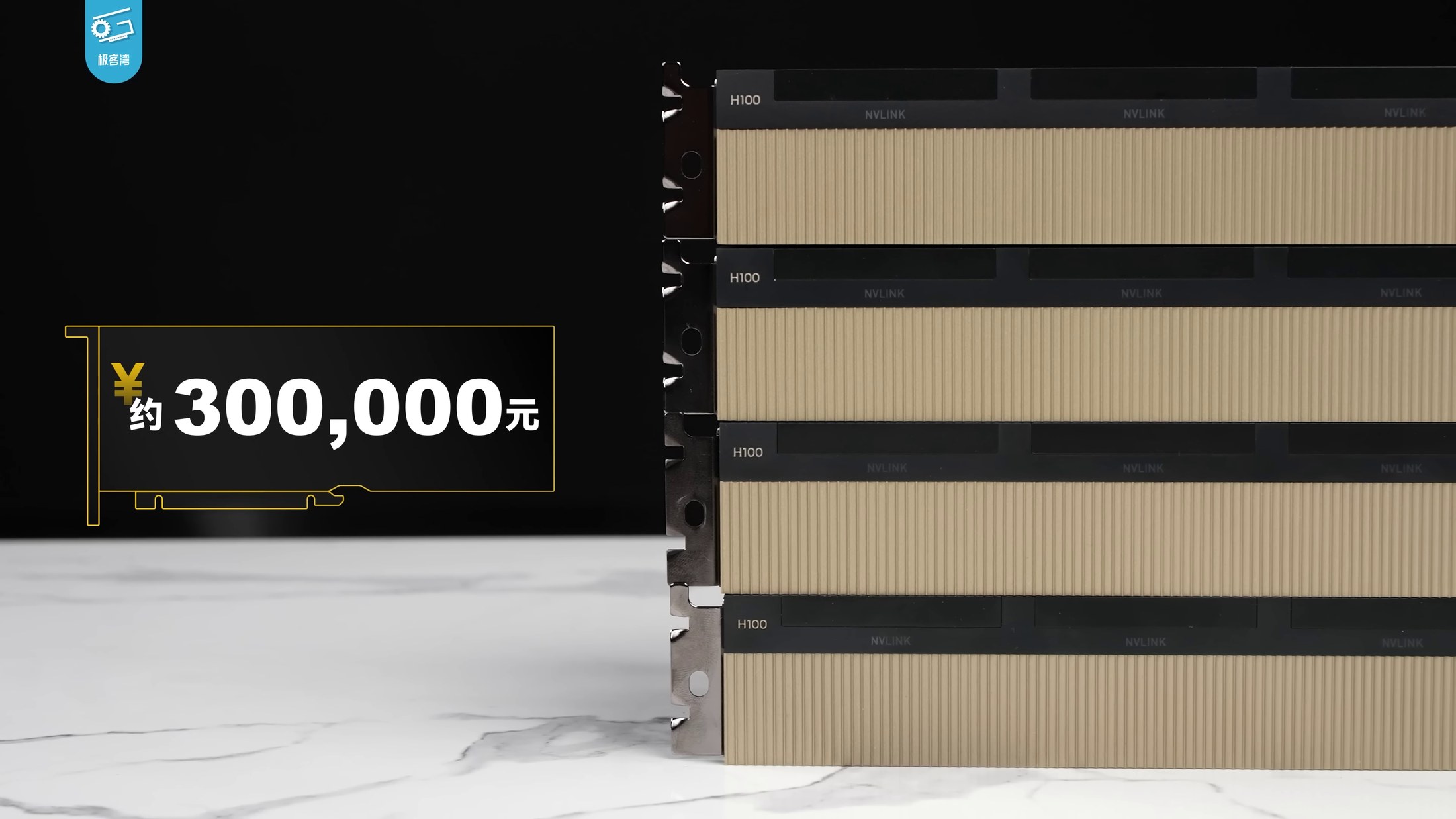
The compute leg is the Commerce Department rule that took effect on Nov 19. It imposes licensing requirements on computing arrangements at data centres outside the US above a threshold roughly equivalent to 750 Nvidia H100 chips, targeting a route to Nvidia processors without importing them. Operators already providing covered services have 90 days to obtain licences. The rule also adds licensing requirements for shipments of advanced chips, including H100s, to Malaysia, Singapore, Indonesia, Thailand and Brazil, with exceptions for qualifying US companies — and the Financial Times reported Thursday that Nvidia told manufacturing partners to stop shipping servers to the four Southeast Asian countries.
The read-through is structural: model release cadence, not just model quality, is now gated by both knowledge channels and compute channels. Z.AI's Monday release of GLM-5.4 — built on an existing 750-billion-parameter model that the company says matches 2–3 trillion-parameter performance via a new design — reads as the workaround to a stalled 3-trillion flagship.
The dispute, and what to watch
A counter-reading has circulated since the Reuters report: a widely shared post on X by industry commentator @jukan05, citing a Chinese sell-side note, says Zhipu's investor-relations team maintains GLM-5.5 has not been delayed — a December launch with "Fable-level performance" and a 10,000-card cluster in reserve. A Reddit thread repeats the claim that Z.AI "clarifies" the model is on schedule. PulseGrid has not seen the underlying sell-side note and cannot independently verify the claim; Zhipu has not announced a launch date publicly, and no GLM-5.5 model card, API endpoint or weight release exists as of publication. Both readings are presented here as they stand.
What settles it: whether GLM-5.5 actually ships in December. Beyond that — how the 90-day licence clock (running to roughly mid-February 2027) resolves for existing overseas compute arrangements; whether Moonshot's European rental deals and Chinese-chipmaker talks materialise; and whether Google and Meta respond to being named as the new distillation sources.
Bottom line
For the first time there is reported, dated evidence that the distillation wall and the remote-access rule are biting Chinese labs' release cadence, not merely their margins: a flagship slipped its month, and a leading lab's internal planning assumes a doubled development cycle. The dispute over Zhipu's timeline is unresolved and both accounts are on the record. Either way, the cheap-model advantage that reset global AI pricing in 2025 is now a dual-chokepoint problem — and the next data point is a launch date.
Cover photo: NVIDIA H100 (极客湾Geekerwan) 002.png — 极客湾Geekerwan / Wikimedia Commons, licensed CC BY 3.0 (cropped; license: https://creativecommons.org/licenses/by/3.0).