An open-weight model built for paper, not the cloud
Amini, the Nairobi-founded sovereign-AI startup led by former Nvidia executive Kate Kallot, has released Soma-1X Lite, a compact open-weight vision-language model that converts paper records — land and civil registries, cabinet papers, geological surveys, handwritten ledgers — into structured, machine-readable data. The two-billion-parameter model is available on Hugging Face with weights, inference instructions and evaluation code, so governments, archives, universities and developers can run it privately and adapt it.
The pitch is leapfrogging: countries that never fully digitised their public records, Amini argues, can go straight from analogue to AI-ready without first building the conventional digital archive. The model labels document elements, links extracted information to its location on the original page with bounding boxes, attaches confidence scores to uncertain readings, and supports human-in-the-loop validation against the source documents.
Small enough for a single GPU — and for a government's budget
Soma-1X Lite runs on a single GPU-equipped workstation — or on a CPU, more slowly — and can process documents fully offline, without calling external AI services. Amini says it processes about 15,000 pages per hour at an estimated GPU compute cost of $0.22 per 1,000 pages. Because inference can run entirely inside an institution's own infrastructure, the company says, data never leaves the country that owns it.
On performance, the company claims a score of 84.7 on olmOCR-Bench, a public document-processing benchmark, ahead of Gemini 3.8 Flash, GPT-5.5 and Claude Sonnet 5. In an evaluation of 435 document pages across ten African languages — including Yoruba, Hausa, Swahili and Wolof — Clinton Oduor, Amini's Head of Data Science, told TechCabal the model recorded an average character error rate of 2.9%, the lowest of five models tested. Benchmark scores and cost figures are Amini's own; full methodology is published on the company's technical blog.
"Constraint has always been our superpower," Kallot said in a statement. "We did not ask how big we could build. We asked how small we could build and still stand among the best in the world."
AI-assisted analysis
Machine-synthesised- Fact
Amini released Soma-1X Lite, a two-billion-parameter open-weight vision-language model that converts paper records into structured machine-readable data; the weights, inference instructions and evaluation code are available on Hugging Face.
Source: TechCabal(opens in a new tab) - Figure
Amini claims Soma-1X Lite scored 84.7 on olmOCR-Bench, ahead of Gemini 3.8 Flash, GPT-5.5 and Claude Sonnet 5, and processes about 15,000 pages per hour at an estimated $0.22 per 1,000 pages in GPU compute; in an evaluation of 435 pages across ten African languages it recorded a 2.9% average character error rate, the lowest of five models tested.
Source: TechCabal(opens in a new tab) - Fact
Soma-1X Lite runs on a single GPU-equipped workstation or on CPU and can process documents fully offline without external AI services, keeping data within the institution's own infrastructure.
Source: TechCabal(opens in a new tab) - Fact
In Botswana, Amini is working with the Ministry of Minerals and Energy to digitise decades of geological records feeding its Kanzi mining-intelligence platform, which runs on national infrastructure; the Central African Republic is expected to follow.
Source: TechCabal(opens in a new tab)
Synthesised by PulseGrid's editorial AI from the sourced claims in this article and reviewed by PulseGrid AI Desk. How we use AI.
Partner content · paid placement
Sponsored tile inventory: Q1 2027
Native tiles in the in-feed carousel and the article block, sold only with the visible Sponsored / Partner Content label. Slot sizes, positions and advertiser terms are published on the advertise page. No newsroom byline is ever attached to partner copy.
Botswana's geological records are the first national deployment
Soma's most concrete deployment is in Botswana, where Amini is working with the Ministry of Minerals and Energy to digitise decades of geological records — paper reports, hand-drawn maps, borehole logs and mineral resource records. The extracted data feeds Kanzi, Amini's sovereign geological and mining-intelligence platform, which combines the digitised archives with geophysical surveys, geochemistry, drilling data, satellite imagery and mining records. The platform runs on national infrastructure, and the company says the Central African Republic is expected to follow.
The model's training origins are unexpectedly Caribbean: work with the Government of Barbados' R.O.A.D. programme (Reclaiming Our Atlantic Destiny), which is digitising millions of fragile, often handwritten pages documenting Atlantic slave societies, shaped how Soma handles faded ink, annotations, complex tables and damaged pages.
The scale of the underlying problem is documented: a 2019 Africa Open Data Index assessment by Open Knowledge International of 420 government datasets across 30 African countries found only 14.5% were available in machine-readable formats. The significance for African governments is sequencing — the data layer of a sovereign AI stack is being built as an open model any state can run, rather than as a service rented from frontier providers. That pairs with the compute half now under construction, from Nigeria–Togo twin data parks to Cassava's 12,000-GPU raise, though both layers face the same headwind: export-control regimes that increasingly ration chips and rental capacity by customer nationality.
What to watch
Whether the Botswana deployment produces independently verifiable quality metrics on real geological records — the strongest evidence yet would be government-published evaluation results rather than company benchmarks.
The next release: Amini plans to extend Soma beyond Latin-based scripts to Ethiopic (Amharic) and Arabic-based traditions such as Ajami, and to harder records like maps, forms and registries.
Adoption beyond Amini's own deployments — whether ministries, archives and universities actually run the open weights themselves, which is the stated success test for the sovereign-software model.
Bottom line
Soma-1X Lite is a small model aimed at a large, unglamorous problem: most of the Global South's public knowledge still lives on paper, where no AI system can read it. By releasing the weights openly and designing for offline, single-GPU operation, Amini is betting that the scarce resource in African AI is not model scale but usable data — and that the institutions holding the data will pay to have it read on infrastructure they control. The benchmark claims are the company's own, but the Botswana and Barbados deployments show the model doing real archival work at national scale.
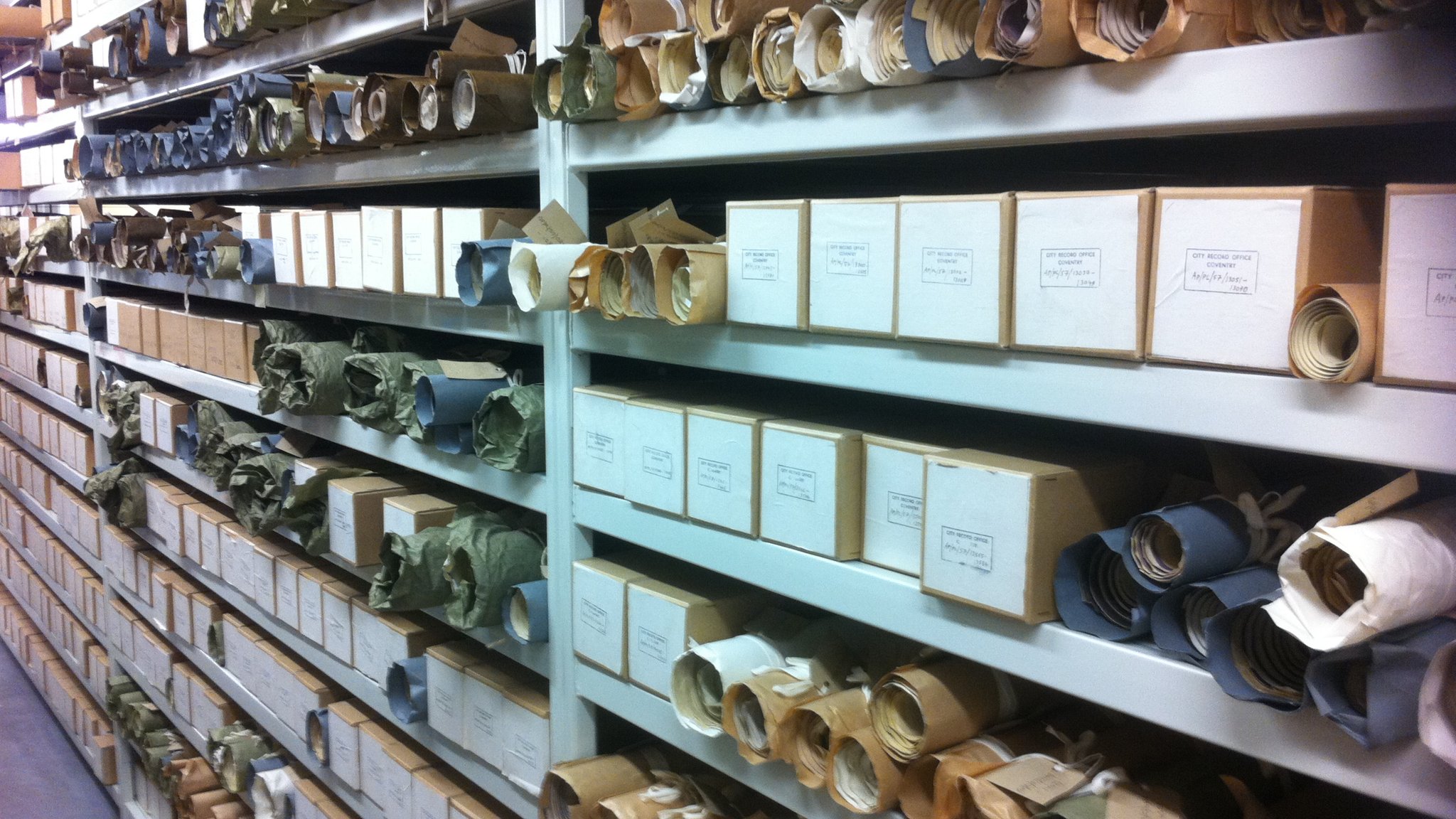
Cover photo: Documents on shelves in the archive store (History Centre) at the Herbert — mooncow / Wikimedia Commons, licensed CC BY-SA 3.0 (cropped; license: https://creativecommons.org/licenses/by-sa/3.0).