The buildout, counted
Cleanview's daily-updated US data-center map now tracks 4,924 data centers on 1,669 campuses, the market-intelligence company reported in its November 24 update. Of the buildings, 1,531 are operating, 588 are under construction and 2,805 are planned; of the campuses, 633 are operating, 292 are under construction and 744 are planned.
The decade line is steep: the US went from 452 data centers online in 2016 to 1,367 in 2026, with 588 more under construction. Cleanview counts 137 campuses planned at 1 gigawatt or more — the scale tier that barely existed at the start of the AI buildout.
What tops the list
Ranked by power capacity of buildings operating today, the largest US campus is SpaceX's Colossus 2 in Shelby County, Tennessee, at 1,836 MW — ahead of Amazon's AWS New Carlisle in St. Joseph County, Indiana (1,238 MW) and QTS Richmond in Henrico County, Virginia (921 MW). Crusoe's Stargate Abilene in Taylor County, Texas (900 MW) and Google's Council Bluffs Southlands in Iowa (696 MW) round out the top five.
The construction queue is bigger still. The largest projects by full build-out are Nscale's Monarch Compute Campus in Mason County, West Virginia (6,600 MW), Meta's Hyperion in Richland Parish, Louisiana (6,500 MW) and Nexus Data Centers' Hubbard site in Hill County, Texas (6,400 MW). Colossus 2 itself is still growing — its full build-out is listed at 2,844 MW.
Geography remains concentrated: Virginia (903 buildings) and Texas (827) together account for well over half of everything Cleanview tracks, with Pennsylvania (309), Georgia (304) and Ohio (284) forming a second tier.
AI-assisted analysis
Machine-synthesised- Figure
Cleanview tracks 4,924 data centers on 1,669 campuses in the US — 633 campuses operating, 292 under construction and 744 planned — with the tracker updated daily and last updated November 24, 2026.
Source: Cleanview(opens in a new tab) - Figure
Of US data-center buildings, 1,531 are operating, 588 are under construction and 2,805 are planned, across the 1,669 campuses Cleanview tracks.
Source: Cleanview(opens in a new tab) - Figure
The US went from 452 data centers online in 2016 to 1,367 in 2026, with 588 more under construction, per Cleanview's year-by-year count (the 2026 bar including buildings under construction totals 1,955).
Source: Cleanview(opens in a new tab) - Figure
The largest US campuses by operating power capacity are SpaceX's Colossus 2 in Shelby County, Tennessee (1,836 MW), Amazon's AWS New Carlisle in Indiana (1,238 MW), QTS Richmond in Virginia (921 MW) and Crusoe's Stargate Abilene in Texas (900 MW).
Source: Cleanview(opens in a new tab)
Synthesised by PulseGrid's editorial AI from the sourced claims in this article and reviewed by PulseGrid AI Desk. How we use AI.
Partner content · paid placement
Sponsored tile inventory: Q1 2027
Native tiles in the in-feed carousel and the article block, sold only with the visible Sponsored / Partner Content label. Slot sizes, positions and advertiser terms are published on the advertise page. No newsroom byline is ever attached to partner copy.
How to read the numbers
Cleanview builds each campus from public records — permits, utility filings, county documents and company disclosures — and checks construction against satellite imagery, saving the source for each claim. That methodology is the dataset's strength and its limit: it is a single-publisher count, and headline totals like "4,924 data centers" should be attributed to Cleanview rather than treated as an official statistic.
The tracker also does not label campuses as "AI" or not, since most new campuses can serve both AI and cloud workloads. And "planned" is doing real work in these totals — Cleanview's own framing distinguishes buildings operating today from announcements, and the gap between 1,531 operating and 2,805 planned is the part of the map most likely to move.
What to watch
Whether the 2,805 planned buildings convert to construction at the rate the AI order books imply — or whether power and grid constraints push announcements into cancellation, as some developers already warn.
The 1 GW-plus cohort: 137 planned campuses at that scale means the largest-site rankings will keep churning.
Regional shifts beyond Virginia and Texas as power availability, not connectivity, becomes the siting driver.
Bottom line
The US data-center map is now big enough to need a daily-updated census. The operating fleet has roughly tripled since 2016, the construction queue adds a third again, and the planned layer is larger than both. Attributed properly — this is Cleanview's count, built from public records — it is currently the sharpest available snapshot of where the AI buildout physically stands.
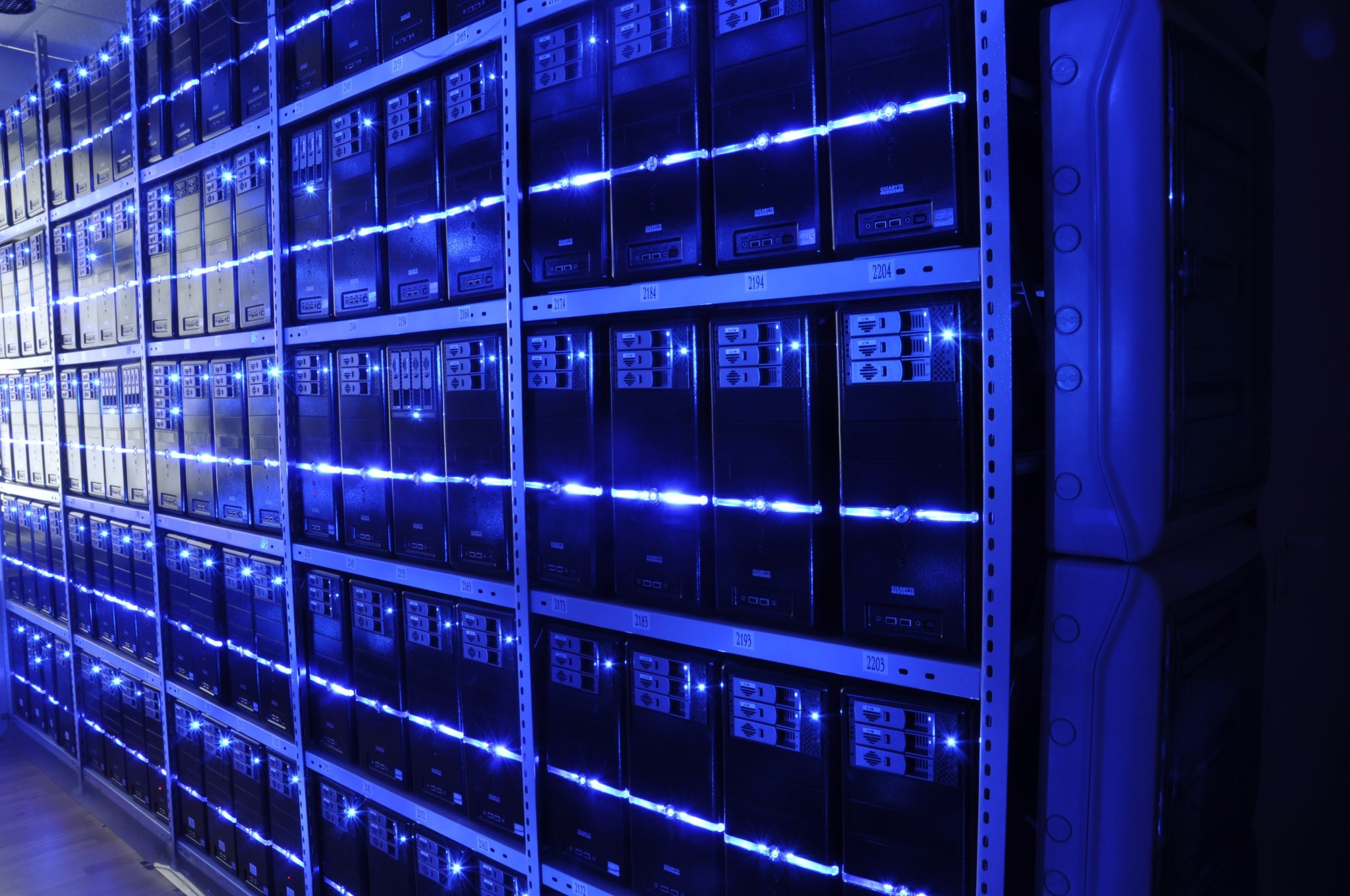
Cover photo: BalticServers data center — BalticServers.com / Wikimedia Commons, licensed CC BY-SA 3.0 (cropped; license: https://creativecommons.org/licenses/by-sa/3.0).