What happened
On November 22, OpenRouter — the inference router that forwards API requests across a pool of model providers — announced it had off-boarded three providers, removed 125 endpoints from eligibility for Zero Data Retention (ZDR), and notified all potentially affected customers. The company said the findings did not show any breach or unauthorized access of OpenRouter itself.
The trigger was research published by security firm Dragos on November 19. Over five months, from July through November 2026, Dragos submitted approximately two million prompts containing unique trackable URLs and canary credentials to widely used AI services, then watched where those secrets surfaced. The verdict: evidence of provider compromises, marketplace resellers viewing and retaining customer prompts through ordinary logging, and providers disregarding privacy settings and published data policies.
Inside the canary findings
The most serious finding was direct theft at the provider level. Dragos found attackers actively stealing data from three hosting providers — none of which knew about their breach until Dragos notified them. The largest incident involved a couple of hundred seeded AWS keys, each sent in exactly one request within a few short windows in late October 2026. Some of the stolen keys came from requests the provider rejected before a model ever ran, which Dragos read as evidence the attacker copied requests at the provider's "front door" rather than deeper in the inference stack. The bait keys were subsequently used for tens of thousands of AWS API calls. In two of the breaches, some stolen requests were marked ZDR — as Dragos put it, a privacy flag does not help when the attacker is already inside.
The routing analysis is its own warning. Dragos traced roughly 2,000 inference routes: several hundred included an unidentified system not in the advertised path, and in a handful of cases a company absent from the path fetched the test image. Dragos also reported that one unnamed Chinese AI lab's systems fetched secret URLs from more than half the prompts sent to its models between July and October 2026 — including about two-thirds of those marked no-data-collection or ZDR.
Separately, multiple resellers on an inference marketplace could view and retain customer prompts using standard logging — no vulnerability or platform bypass required — and Dragos observed prompts sent to US-based providers being transmitted to Chinese AI organizations, unique URLs being accessed months after a single request, and one seeded link surfacing in an internal company chat in China.
AI-assisted analysis
Machine-synthesised- Fact
On November 22, 2026, OpenRouter announced it had off-boarded three inference providers, removed 125 endpoints from Zero Data Retention (ZDR) eligibility, and notified all potentially affected customers, after security researchers reported that certain inference providers had data compromised or shown evidence their data policies were not being upheld. OpenRouter said the findings did not show any breach or unauthorized access of OpenRouter itself.
Source: OpenRouter(opens in a new tab) - Fact
In research published November 19, 2026, Dragos described submitting approximately two million prompts containing unique URLs and canary token credentials to widely used AI services from July through November 2026 and monitoring what happened after inference. It reported three findings: evidence that data from at least three AI providers was exposed, marketplace resellers viewing and retaining customer prompts via standard logging, and multiple cases of providers appearing not to honor customer privacy settings or published policies.
Source: Dragos(opens in a new tab) - Fact
The largest compromise involved a couple of hundred seeded AWS keys sent within a few short windows in late October 2026; some came from requests the provider rejected before a model ever ran, which Dragos interpreted as evidence that copying occurred when requests first reached the provider. The bait keys were used for tens of thousands of AWS API calls, and in two of the three breaches some stolen requests were marked ZDR.
Source: Dragos(opens in a new tab) - Fact
Public provider notices linked by OpenRouter include: Novita, which said a routing configuration issue broadened an API forwarding path intended for specific customers and that some MiniMax requests made directly through Novita or via OpenRouter between May 28 and November 11, 2026 may have had contents accessed or retained by a third party; Phala, whose November 10 preliminary report covers DeepSeek V4 Flash 0731 requests routed via OpenRouter from October 21 to November 8, 2026 and describes an attacker chaining a legacy internet-facing service with management interfaces that trusted loopback access without independently authenticating callers; and Together AI, which disclosed on November 21, 2026 that an unauthorized party downloaded stored prompt samples after an AI coding agent committed a private repository credential to a public GitHub repository, with samples from MiniMax M3, GLM-5.2 and Kimi K2.6 requests primarily in June and July 2026.
Source: OpenRouter(opens in a new tab)
Synthesised by PulseGrid's editorial AI from the sourced claims in this article and reviewed by PulseGrid AI Desk. How we use AI.
Partner content · paid placement
Sponsored tile inventory: Q1 2027
Native tiles in the in-feed carousel and the article block, sold only with the visible Sponsored / Partner Content label. Slot sizes, positions and advertiser terms are published on the advertise page. No newsroom byline is ever attached to partner copy.
The provider notices
OpenRouter's public list links incident notices from three providers, while noting not all affected providers have posted publicly and that the list does not identify which three were off-boarded. Novita disclosed that a routing configuration issue broadened an API forwarding path intended for specific customers, sending some MiniMax requests to MiniMax's official API rather than Novita-hosted infrastructure between May 28 and November 11, 2026. Phala's preliminary report covers requests routed by OpenRouter between October 21 and November 8, 2026, and describes an attacker chaining a legacy internet-facing service with management interfaces that trusted loopback access without authenticating callers — exposing in-flight request data during processing. Together AI disclosed on November 21 that an unauthorized party downloaded stored prompt samples after an AI coding agent committed a private repository credential to a public GitHub repository; the samples covered MiniMax M3, GLM-5.2 and Kimi K2.6 requests from June and July 2026, and the party tested five Dragos canary credentials it found inside.
Why ZDR stopped being an assurance
Zero Data Retention is the strictest privacy setting in the inference market: the prompt and response are not stored. Routers are supposed to forward ZDR requests only to providers offering the same guarantee. The Dragos work shows the guarantee was being violated three different ways — by attackers inside providers, by resellers reading standard logs, and by routing paths that quietly widened who could see a request.
For enterprises and governments buying AI through resellers and aggregators, the practical implication is that a ZDR label on a pricing page is not the same as verified zero retention on the actual request path. OpenRouter says removed endpoints will need "appropriate assurances and validation" before regaining ZDR eligibility, that it is adapting the researchers' testing approach for ongoing checks, and that it is technically verifying network paths to identify requests being forwarded to third parties. Dragos' own guidance for buyers: prefer first-tier providers with a single contract, pick upstream providers explicitly instead of accepting default pools, and seed your own canaries.
PulseGrid's read: the compliance surface for AI adoption is moving from hardware to the inference layer. African enterprises and public institutions increasingly buy model access through local resellers and telco bundles — the same multi-hop structure this research shows leaking. Data-protection regimes like Nigeria's NDPR assume you can say who processes personal data; inference routing now makes that question materially harder to answer.
What to watch
Whether OpenRouter's ongoing canary-style checks surface further providers, and which of the three off-boarded ones are eventually named.
Whether ZDR certification shifts from a checkbox to an audited claim — validated request paths, not just provider assurances.
Whether enterprise and government AI procurement (including in Nigeria and South Africa) starts demanding path-level verification and incident disclosure terms from resellers.
And whether the other affected providers that have not posted public notices are pushed into disclosure.
Bottom line
The inference economy runs on trust labels — ZDR, no-training, data-residency — that this research shows were not enforced end to end. OpenRouter's response is the first systematic cleanup of that gap, and its new standard (validation before ZDR is restored) is the one buyers should hold every provider to.
PulseGrid will track provider disclosures, the naming of the off-boarded firms, and any regulatory follow-up on inference-layer data handling.
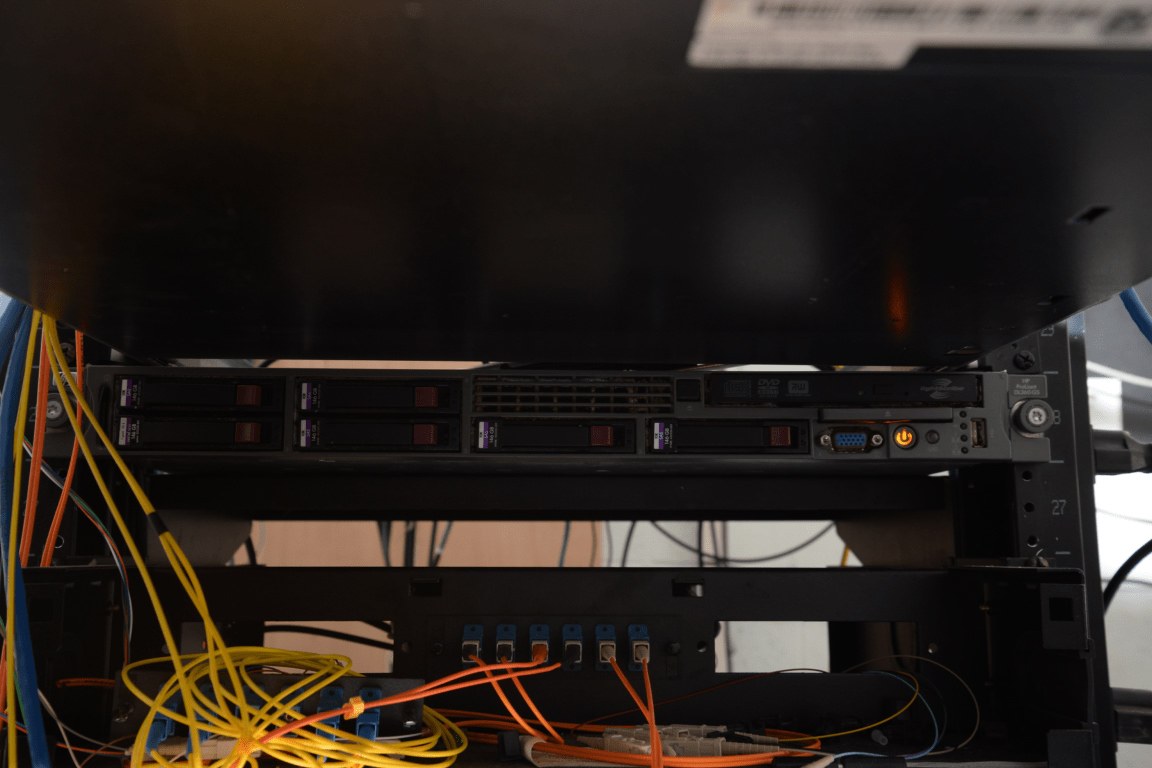
Cover photo: EFTA00002518 - Server rack with multiple hard drives and network cables connected in a data center environment — Federal Bureau of Investigation / Wikimedia Commons (Public domain, cropped; no rights reserved).