What Samsung changed
Samsung Electronics has restructured its semiconductor organisation to accelerate next-generation chip development, cutting management layers in memory R&D, strengthening advanced packaging capabilities and creating a dedicated logic design team for custom high-bandwidth memory (HBM) used in AI accelerators. The changes were announced to employees at a briefing on Nov 26 and reported the same day by Chosun Ilbo's English edition and Maeil Business Newspaper, with KED Global and DIGITIMES following on Nov 27.
In the Memory Business of the Device Solutions (DS) division, Samsung removed the "development executive" post that sat between the business head and the DRAM, Flash and Solution Development offices, so the business head now communicates with each office directly. Hwang Sang-jun, who takes over as head of the Memory Business following the Nov 20 executive appointments, concurrently retains leadership of DRAM Development, keeping all memory product development under his direct oversight.
The custom-HBM logic team
The centrepiece of the reorg is a new Logic Development Team under the Memory Business's Solution Development Office, expected to be led by a vice-president-level executive. Its job is logic design for custom HBM (cHBM) — customer-tailored HBM built to a client's specifications — and for zHBM, a next-generation 3D HBM design architecture Samsung is pursuing in which AI chips and memory are stacked vertically. Some System-on-Chip staff from the System LSI Business are expected to be reassigned to the team.
Samsung has previously designed the logic semiconductors that process and control data across various organisations, including its System LSI Business. Consolidating that capability inside the Memory Business reflects how central logic design has become as the HBM market evolves toward customisation: in cHBM, the base-die logic is what differentiates one customer's stack from another's, and logic design capability has become a key competitive factor for memory makers.
The System LSI division, meanwhile, had its SoC, Sensor and LSI business teams elevated to development centres and its scattered sales and marketing organisations consolidated into a restored Strategic Marketing Office under newly appointed System LSI head Jo Sang-yeon — read as a push to win customers for Samsung's Exynos processors and custom SoCs built to client specifications. On the personnel side, Vice President Yoon Ha-ryong was tapped to head the Americas subsidiary that works with Nvidia, AMD and US big tech, and Vice President Lee Hwa-sung to head the Austin branch ahead of the Taylor, Texas foundry's full-scale operation.
AI-assisted analysis
Machine-synthesised- Fact
Samsung Electronics implemented an organisational restructuring announced to employees on Nov 26: in the Memory Business of the Device Solutions division, the DRAM, Flash and Solution development teams were placed directly under the business division head (previously under a memory development department led by a development executive), streamlining decision-making to accelerate next-generation memory development such as HBM.
Source: Chosun Ilbo English (Park Ji-min)(opens in a new tab) - Fact
Samsung established a Logic Development Team under the Solution Development Office of its Memory Business, expected to be led by a vice-president-level executive, to handle logic design for custom HBM (cHBM) and zHBM — cHBM being customer-tailored HBM and zHBM a next-generation 3D HBM design architecture in which AI chips and memory are stacked vertically; some System-on-Chip staff from the System LSI Business are expected to be reassigned to the team.
Source: Maeil Business Newspaper(opens in a new tab) - Fact
Samsung has overhauled its semiconductor operations to speed the development of next-generation chips, cutting management layers and strengthening advanced packaging capabilities as artificial intelligence intensifies competition across the industry.
Source: KED Global(opens in a new tab) - Fact
Samsung is streamlining its memory development operations and setting up a dedicated logic design team as it seeks to expand its presence in the market for customized high-bandwidth memory used in AI accelerators.
Source: DIGITIMES (Sherri Wang)(opens in a new tab)
Synthesised by PulseGrid's editorial AI from the sourced claims in this article and reviewed by PulseGrid AI Desk. How we use AI.
Partner content · paid placement
Sponsored tile inventory: Q1 2027
Native tiles in the in-feed carousel and the article block, sold only with the visible Sponsored / Partner Content label. Slot sizes, positions and advertiser terms are published on the advertise page. No newsroom byline is ever attached to partner copy.
Why it matters
This is structural follow-through on the Nov 20 executive reshuffle that promoted Hwang Sang-joon to lead the Memory Business. Samsung is reorganising around exactly the capability that decides who captures AI-accelerator margins: the logic inside customised memory stacks, plus the advanced packaging to build them. KED Global framed the overhaul as a bid to speed development of next-generation chips "as artificial intelligence intensifies competition across the industry"; DIGITIMES described it as a push to expand Samsung's presence in the custom-HBM market for AI accelerators.
The competitive context is a custom-HBM race against SK hynix, which has led the HBM market through the AI boom, and against Micron — with a broader cast (Huawei among them) now designing custom memory stacks of their own. The zHBM ambition — vertically stacking AI chips and memory — is the most aggressive reading of that race: it moves the memory maker toward the accelerator itself. None of the three Korean outlets carried financial targets with the reorg, and Samsung's figures should be taken from its own filings as they land.
What to watch
The VP-level appointment to lead the Logic Development Team, and whether System LSI SoC staff formally move across.
First named cHBM/zHBM customers and design wins — the reorg only pays off if custom-HBM contracts follow.
Whether the flattened reporting lines measurably speed HBM4E and post-HBM4E qualification with Nvidia and the hyperscalers.
Bottom line
Samsung is answering the custom-HBM era with an org chart: fewer management layers between decision and development, and logic design pulled inside the memory business where the customer-specific work now happens. It is a quiet story with loud implications — the memory makers that can co-design logic with their customers are the ones that stop selling commodities. The test is whether Hwang's streamlined Memory Business converts this structure into design wins before rivals do the same.
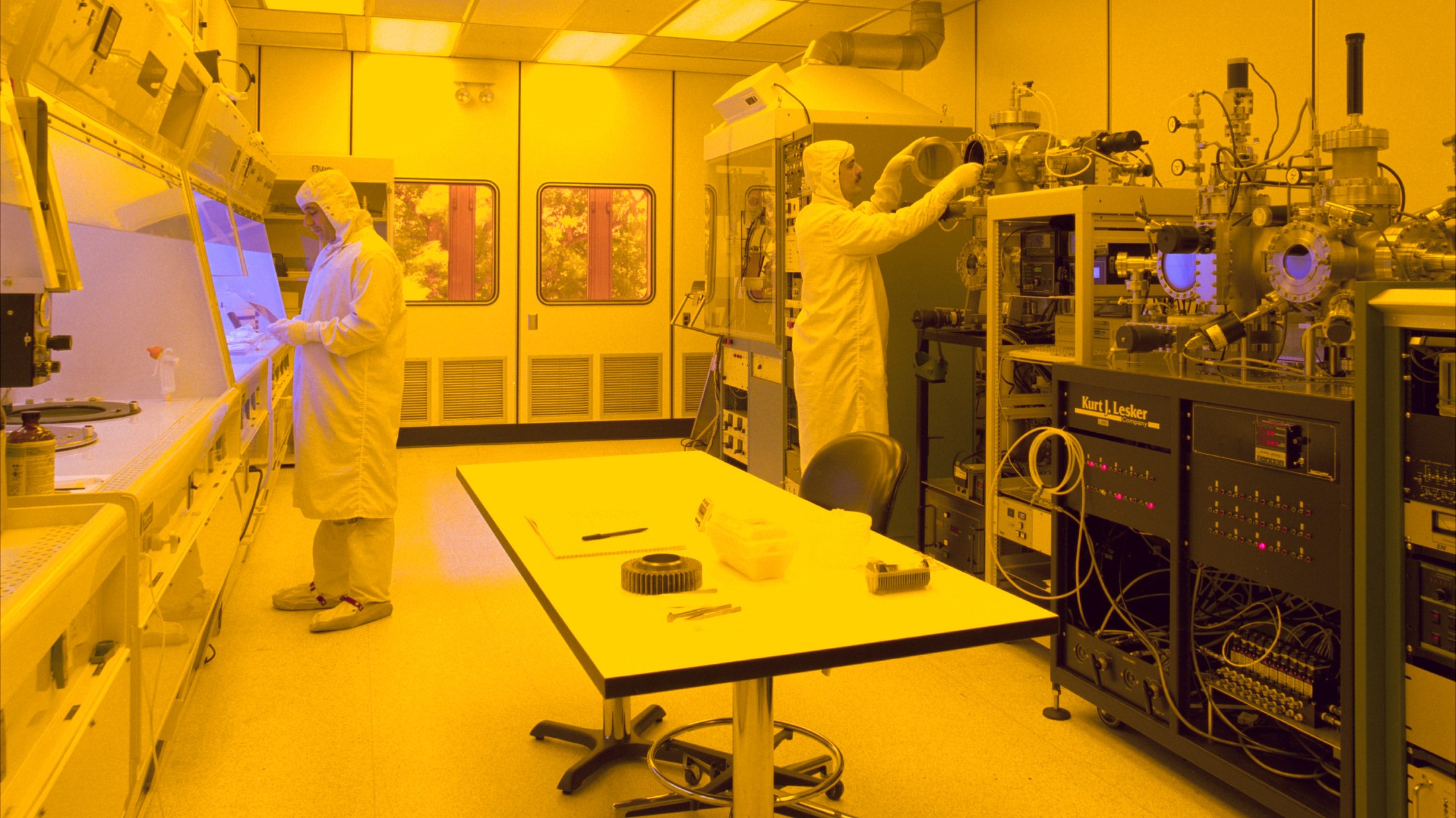
Cover photo: Clean room.jpg — Duk / Wikimedia Commons, public domain (cropped).