The proposal
The US Energy Information Administration has proposed a new mandatory survey that would, for the first time, measure data-center energy consumption at the facility level across the entire United States. Published in the Federal Register on Nov 27 (FR Doc 2026-24077, 91 FR 76760), the notice invites public comment on the Data Center Energy Consumption Survey (DCECS), to be collected on the new Form EIA-872.
“Form EIA-872 will collect facility-level data on energy consumption and energy-related physical and operational characteristics from all U.S. data centers with a design capacity of at least 1 megawatt (MW),” the notice states, adding that DCECS “will be used to produce national statistics on data center energy consumption and electricity demand.” EIA is explicit about why: “A new survey is required because there are currently no sources that comprehensively measure end-use energy consumption of data centers and certain aspects of their operating profiles.”
What gets counted
The threshold is IT design capacity of at least 1 MW per facility. In scope: enterprise data centers, colocation facilities, hyperscale facilities, edge data centers, so-called super-intelligence data centers, carrier hotels, network gateways, and cryptocurrency mines. Multi-building campuses count as a single facility where energy, cooling, or power-delivery infrastructure is functionally integrated or shared. Sub-1MW facilities are excluded, and EIA says it is not proposing to collect any confidential business information about the customers these facilities serve.
The burden math: EIA estimates 1,400 respondents per year, 1,400 total responses, 12,200 burden hours, and a reporting cost of $1,158,268 (12,200 hours at $94.94/hour). Each company with at least one data center would first receive a questionnaire to identify its facility roster, then report data for each in-scope site for the previous reference year. Responses are confidential by law under the 2018 CIPSEA statute, and EIA will publish only aggregate statistics.
The timing is deliberate: as part of an effort to move all its consumption-survey programs from multi-year to annual publication, EIA plans to run DCECS in 2027 as the annual data-collection component of commercial energy consumption statistics. Comments on the proposed collection — including on EIA's definition of a data center facility — close on Jan 26, 2027.
AI-assisted analysis
Machine-synthesised- Fact
The US EIA published a proposed new information collection, the Data Center Energy Consumption Survey (DCECS) on Form EIA-872, in the Federal Register on Nov 27, 2026 (FR Doc 2026-24077, 91 FR 76760), signed Nov 23 and filed Nov 25; public comments close Jan 26, 2027.
Source: Federal Register / US EIA(opens in a new tab) - Quote
Form EIA-872 will collect facility-level energy consumption and operational data from all US data centers with a design capacity of at least 1 MW, and DCECS will be used to produce national statistics on data center energy consumption and electricity demand; EIA states a new survey is required because no existing sources comprehensively measure end-use energy consumption of data centers.
Source: Federal Register / US EIA(opens in a new tab) - Fact
In-scope facilities include enterprise, colocation, hyperscale, edge and super-intelligence data centers, carrier hotels, network gateways and cryptocurrency mines; multi-building campuses count as one facility where energy, cooling or power delivery is shared; facilities below 1 MW are excluded and EIA does not propose to collect confidential information about customers.
Source: Federal Register / US EIA(opens in a new tab) - Figure
EIA estimates 1,400 respondents and 1,400 total responses per year, 12,200 burden hours, and a reporting and recordkeeping cost burden of $1,158,268; responses are confidential by law under CIPSEA 2018 and will be published only in aggregate form; EIA plans to conduct DCECS in 2027 as the annual data collection component of commercial energy consumption statistics.
Source: Federal Register / US EIA(opens in a new tab)
Synthesised by PulseGrid's editorial AI from the sourced claims in this article and reviewed by PulseGrid AI Desk. How we use AI.
Partner content · paid placement
Sponsored tile inventory: Q1 2027
Native tiles in the in-feed carousel and the article block, sold only with the visible Sponsored / Partner Content label. Slot sizes, positions and advertiser terms are published on the advertise page. No newsroom byline is ever attached to partner copy.
Why it matters
The expansion of AI and cloud computing is putting unprecedented pressure on electricity networks, yet the absence of comprehensive facility-level energy statistics makes it hard to assess what the sector actually consumes, Digital Watch notes in its write-up of the proposal. Regular reporting could sharpen electricity demand forecasts and inform grid-investment and energy-policy decisions. But because EIA intends to publish only aggregates, the survey will not give the public visibility into the energy consumption of individual data centers.
That gap has political weight. The contested numbers behind rate cases, moratorium fights, and grid studies — how much power data centers draw, how fast demand grows, who pays for the grid buildout — are currently supplied largely by the industry itself. A mandatory federal dataset with statutory confidentiality would give regulators, utilities, and researchers a common baseline, and the comment docket now becomes the venue where hyperscalers, coalitions, and consumer advocates fight over the definitions.
For Nigeria and Africa, the contrast is stark: the announced data-center builds in Lagos, Abuja, and across the continent are self-reported, and no comparable disclosure regime exists. Grid-crisis debates in African capitals are being conducted without anything like the measurement instrument EIA just proposed.
What to watch
The comment docket: industry responses due Jan 26, 2027 will map the battle lines over data-center energy reporting — expect fights over the 1 MW threshold, the campus definition, and burden estimates.
The BAAJA link: the Senate's recently passed energy-permitting bill includes a section on the collection of data on computational load entities — watch whether EIA coordinates DCECS with that statutory mandate.
The 2027 first run: if DCECS launches on schedule, the first national facility-level dataset lands while the buildout is still accelerating.
Bottom line
The era of trust-me data-center energy claims is ending. The federal government is building the meter, the definitions are now on the public record, and whatever comes out of the comment fight will shape how the compute buildout is priced, permitted, and policed for years. The proposal's own premise is the headline: until now, nobody comprehensively measured this.
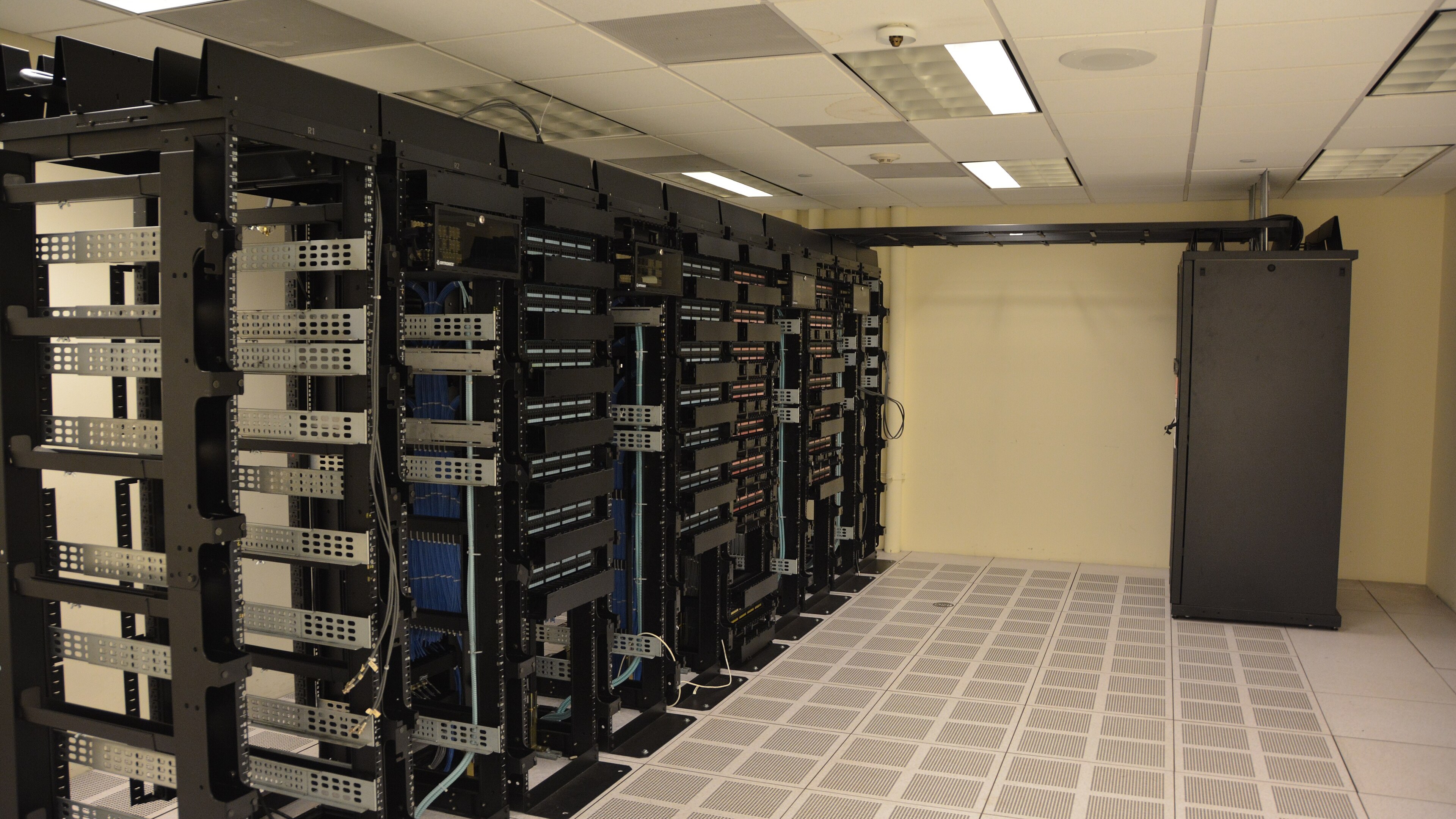
Cover photo: Datacenter server racks — Carl Lender / Wikimedia Commons, licensed CC BY 2.0 (cropped; license: https://creativecommons.org/licenses/by/2.0).